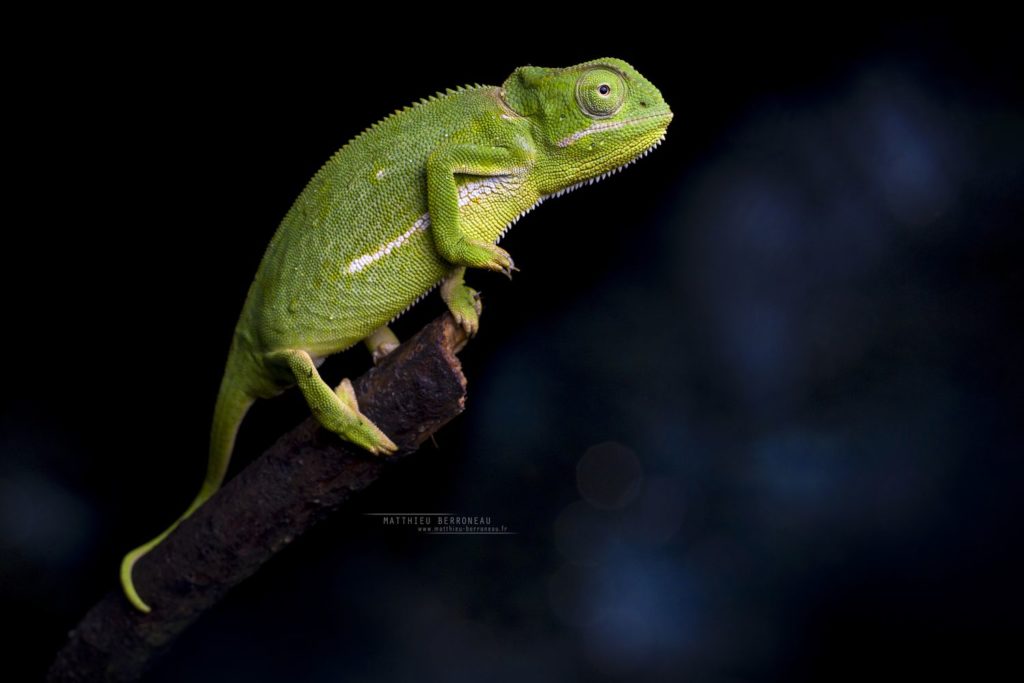
Je suis un amoureux fou des expéditions et des voyages naturalistes, avec un gros faible pour les forêts tropicales africaines. Je réalise désormais mon rêve en guidant les passionnés en Tanzanie, où nous partons à la découverte des forêts les plus riches en biodiversité d’Afrique. Je vous laisse, à ce sujet, vous renseignez sur les fameuses “forêts de l’Arc oriental” et leur origine.
Sony a7v fraîchement reçu, voici l’occasion de faire d’une pierre deux coups, et de tester en condition réel mon nouveau boîtier. J’ai donc réglé au mieux l’appareil, car il s’agit d’être efficace sur le terrain : je ne suis pas là pour faire des photos, mais principalement pour accompagner le groupe à observer et photographier la faune ! Sony a7v customisé aux petits oignons donc, réglages 1 (photo macro), 2 (photo nocturne au flash) et 3 (suivi animalier sportif) ok, je suis prêt !
I am madly in love with expeditions and nature trips, with a particular fondness for African rainforests. I am now fulfilling my dream by guiding enthusiasts in Tanzania, where we set off to explore Africa’s most biodiverse forests. I’ll leave you to find out more about the famous “Eastern Arc forests” and their origins.
I recently received my Sony a7v, so this is an opportunity to kill two birds with one stone and test my new camera in real conditions. So I adjusted the camera as best I could, because I need to be efficient in the field: I’m not here to take pictures, but mainly to accompany the group as they observe and photograph wildlife! My Sony a7v is customized to perfection, settings 1 (macro photography), 2 (night photography with flash) and 3 (sports animal tracking) are all set, so I’m ready to go!
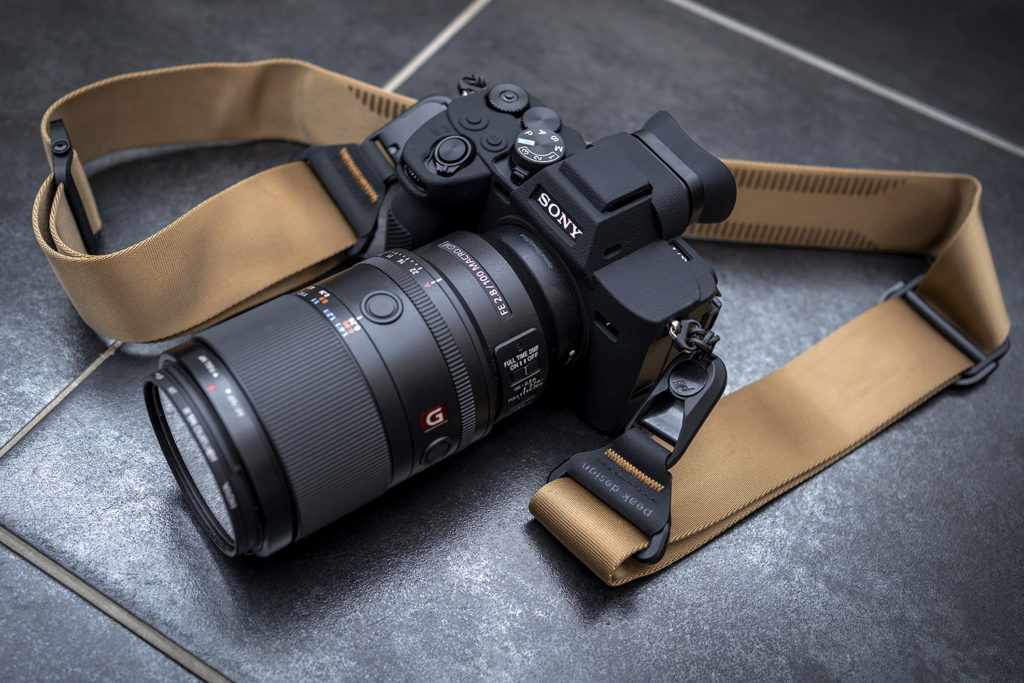
Sony a7v équipé pour le terrain – Full tuned Sony a7v ready for the field
Le voyage consiste, sur deux semaines, en une visite de mes spots préférés de Tanzanie, où la richesse en espèces et en endémisme atteint des records. Des coins magiques, où nous sommes accueillis comme des rois.
Pendant ces deux semaines, nous marchons en forêt, de jour comme de nuit, à la rencontre des caméléons, des lézards, des vipères arboricoles (le genre Atheris… miam !), des grenouilles… mais également des oiseaux, des singes, bref, on ne sait plus ou donner de la tête !
The two-week trip consists of visiting my favorite spots in Tanzania, where species richness and endemism reach record levels. These are magical places where we are welcomed like royalty.
During these two weeks, we walk in the forest, day and night, encountering chameleons, lizards, tree vipers (the genus Atheris… yum!), frogs… but also birds, monkeys… in short, we don’t know where to look first!
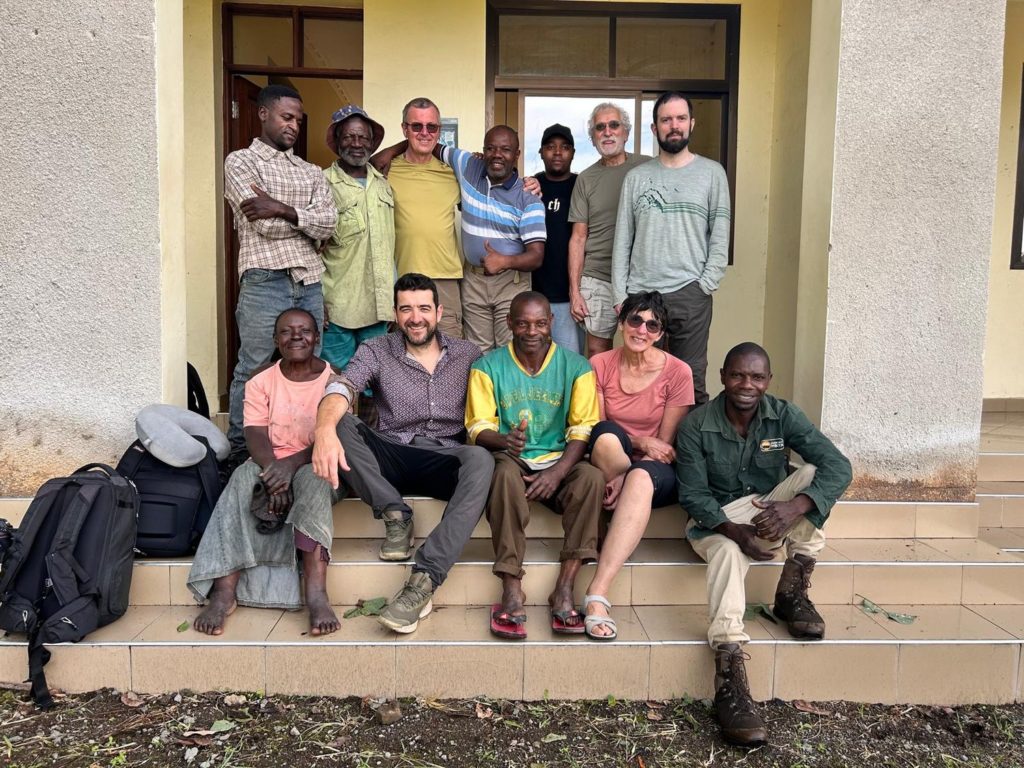
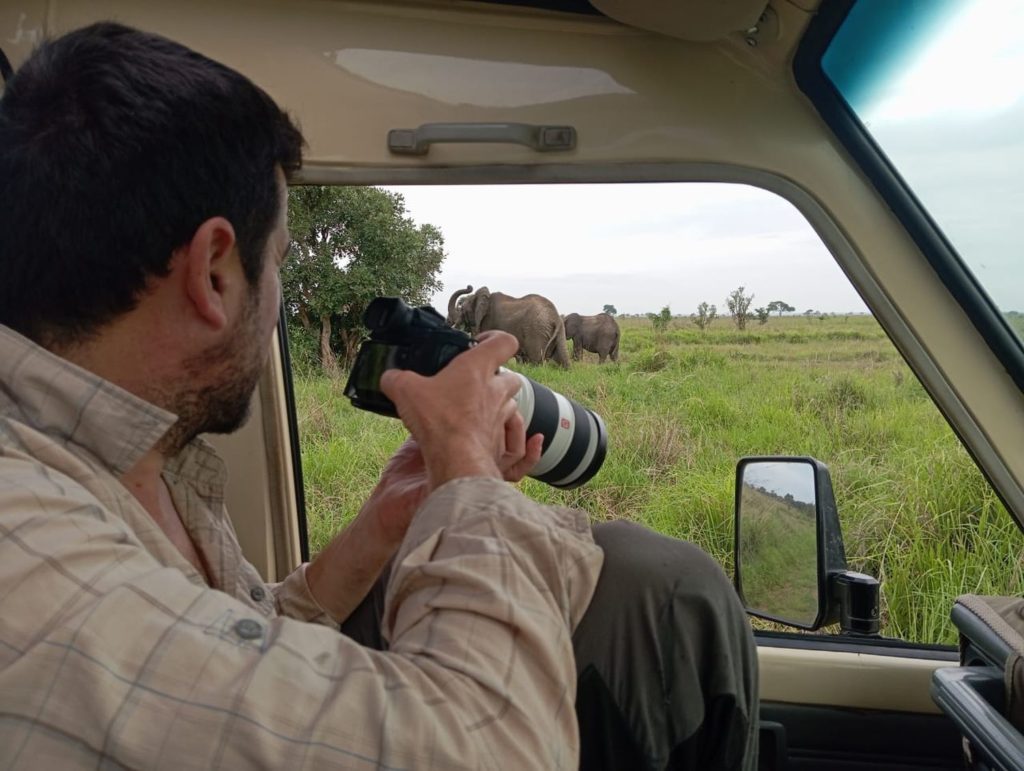
La team !
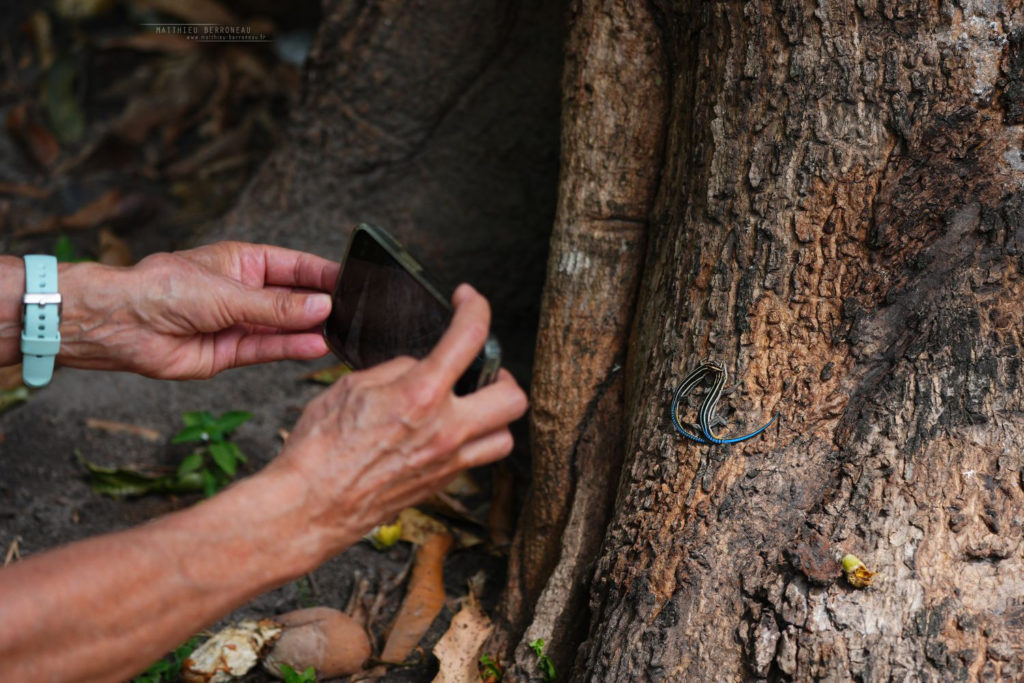
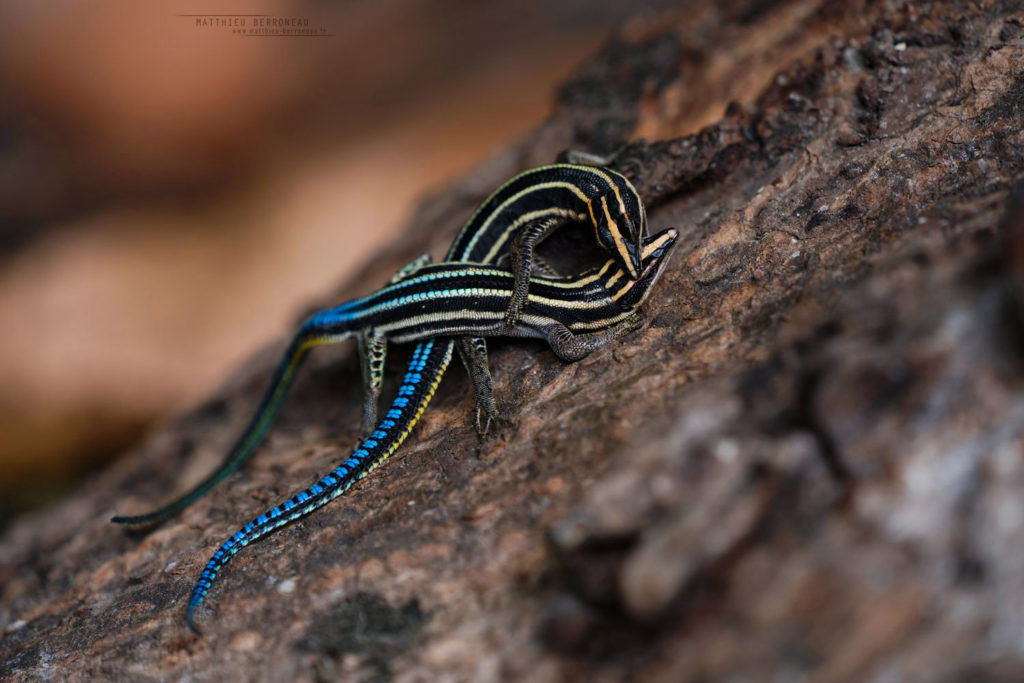
Combat entre mâles de Holaspis guentheri, ça ne rigole pas ! Fight between Holaspis guentheri males – Sony a7v & 100-400G, f5.6 1/1000s iso 640.
La photographie animalière en forêt tropicale n’est jamais simple, pour des raisons diverses et variées, les principales étant une lumière particulièrement difficile (lumière très dure, ombres très marquées) et l’humidité ambiante importante (souvent source de buée sur les objectifs, dégradant fortement le piqué des photos). Dans ces conditions, l’utilisation du format raw est selon moi obligatoire, et permettra, en post-traitement, de contrebalancer (au mieux) ces conditions difficiles. On apprécie ici deux qualités majeures du Sony a7v : sa montée en iso, particulièrement propre, et surtout sa plage dynamique absolument phénoménale : le traitement des raws, sur l’écran, au retour du terrain, est un véritable plaisir.
Un autre atout du Sony a7v est son nouvel écran articulé, qui permet les cadrages les plus acrobatiques. Là encore, dans la forêt, dans les conditions d’accès dégradés, quand les approches doivent être discrètes, parfois à bras tendus, un tel écran permet des clichés auparavant impossibles (sauf avec le vieux Sony a99, qui avait, selon moi, une articulation encore mieux pensée) !
Wildlife photography in the rainforest is never easy, for a variety of reasons, the main ones being particularly difficult lighting conditions (very harsh light, very pronounced shadows) and high humidity (often causing fogging on lenses, which significantly degrades the sharpness of photos). In these conditions, I believe it is essential to use the RAW format, which will allow you to compensate for these difficult conditions in post-processing. Here, we appreciate two major qualities of the Sony a7v: its particularly clean ISO performance and, above all, its absolutely phenomenal dynamic range. Processing RAW files on the screen after returning from the field is a real pleasure.
Another advantage of the Sony a7v is its new articulated screen, which allows for the most acrobatic framing. Here again, in the forest, in difficult access conditions, when approaches must be discreet, sometimes at arm’s length, such a screen allows for shots that were previously impossible (except for the old Sony a99, which, in my opinion, had an even better-designed hinge) !
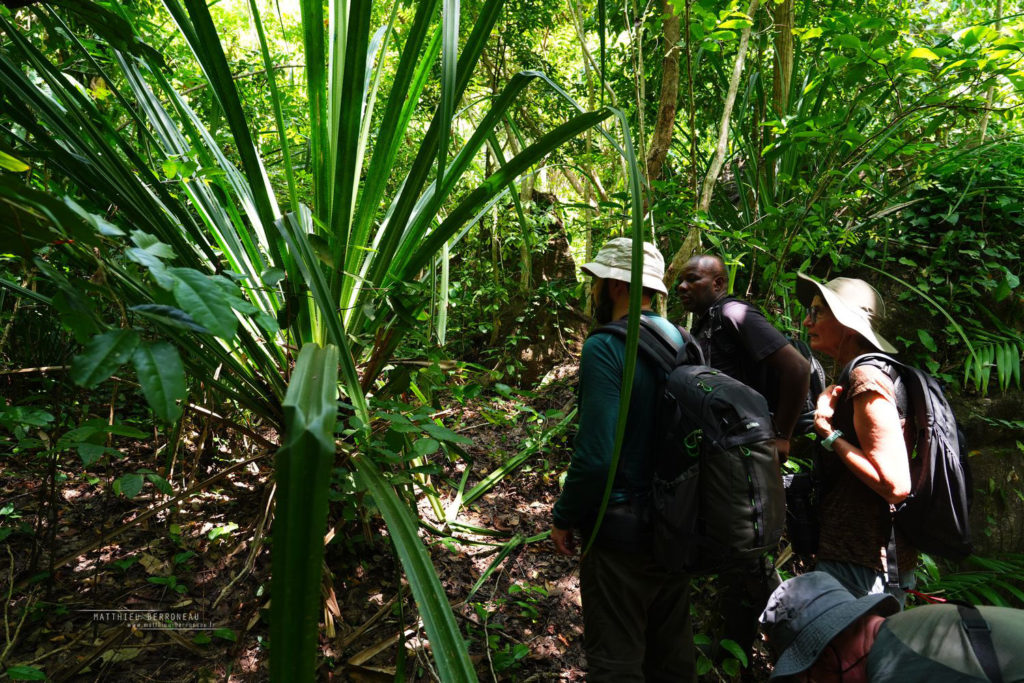
La lumière est souvent très dure en forêt – So hard light in the deep forest!
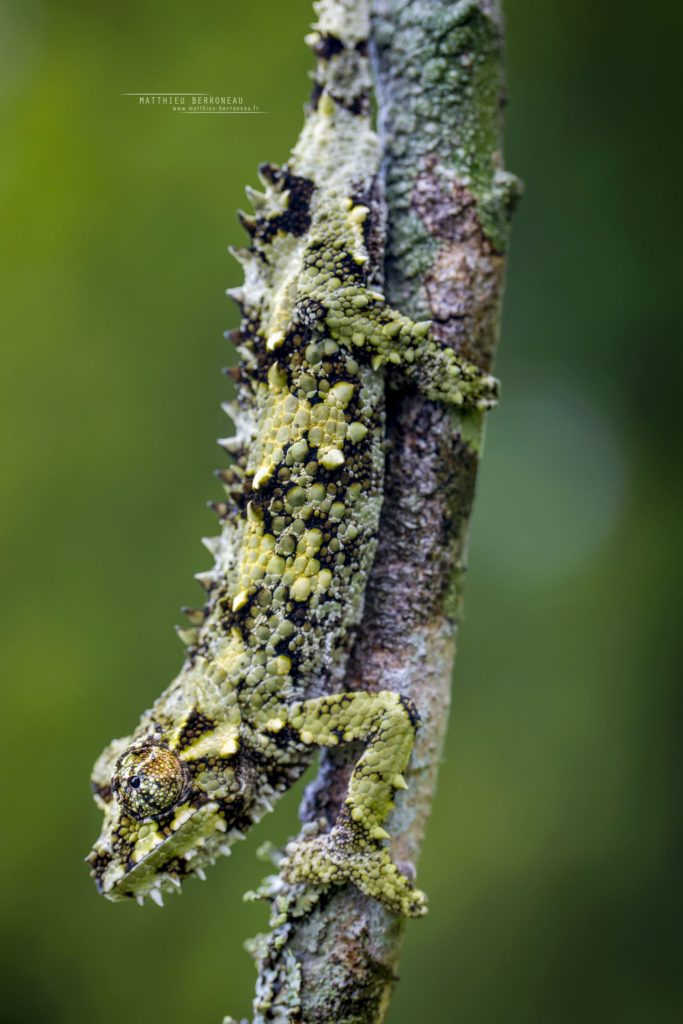
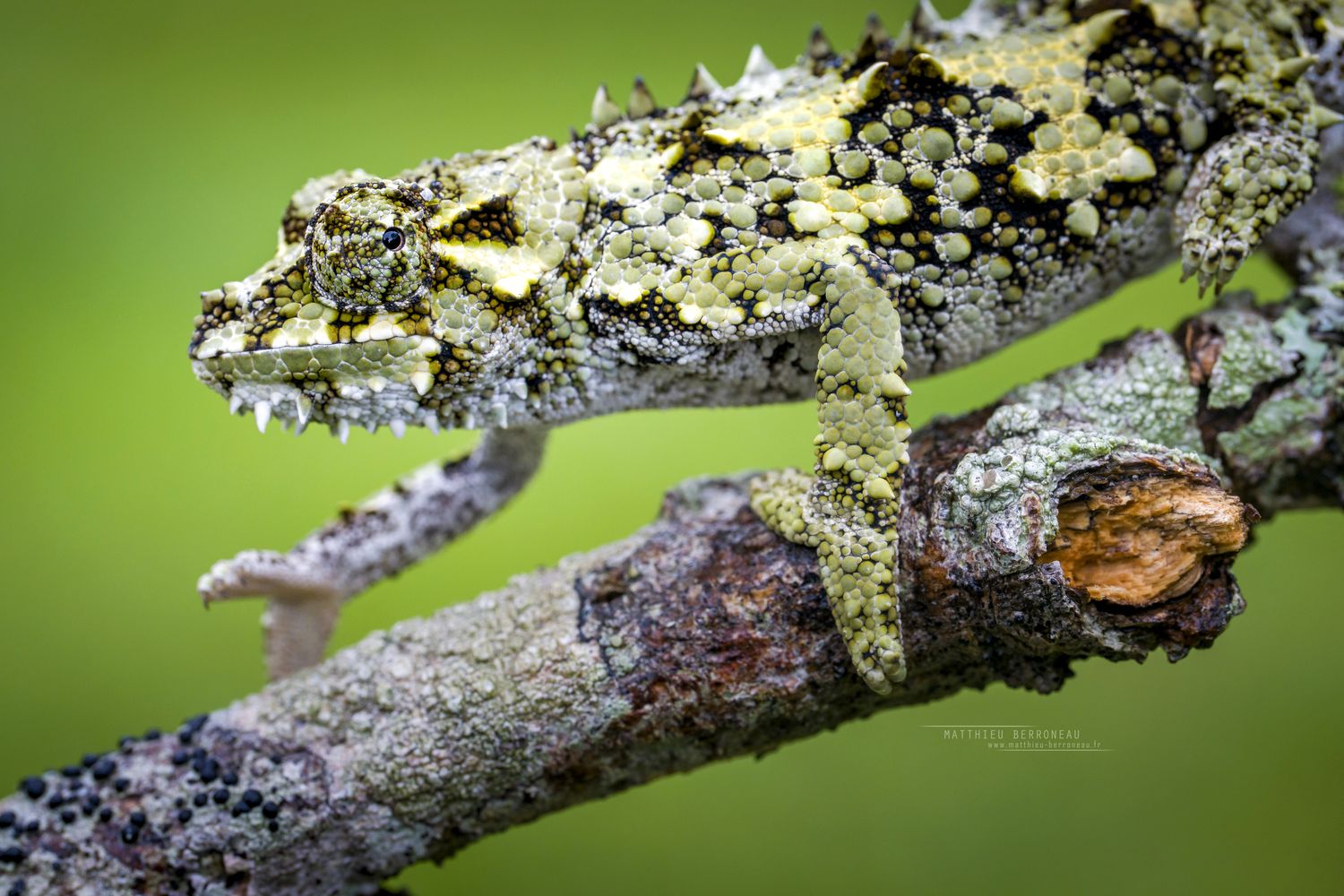
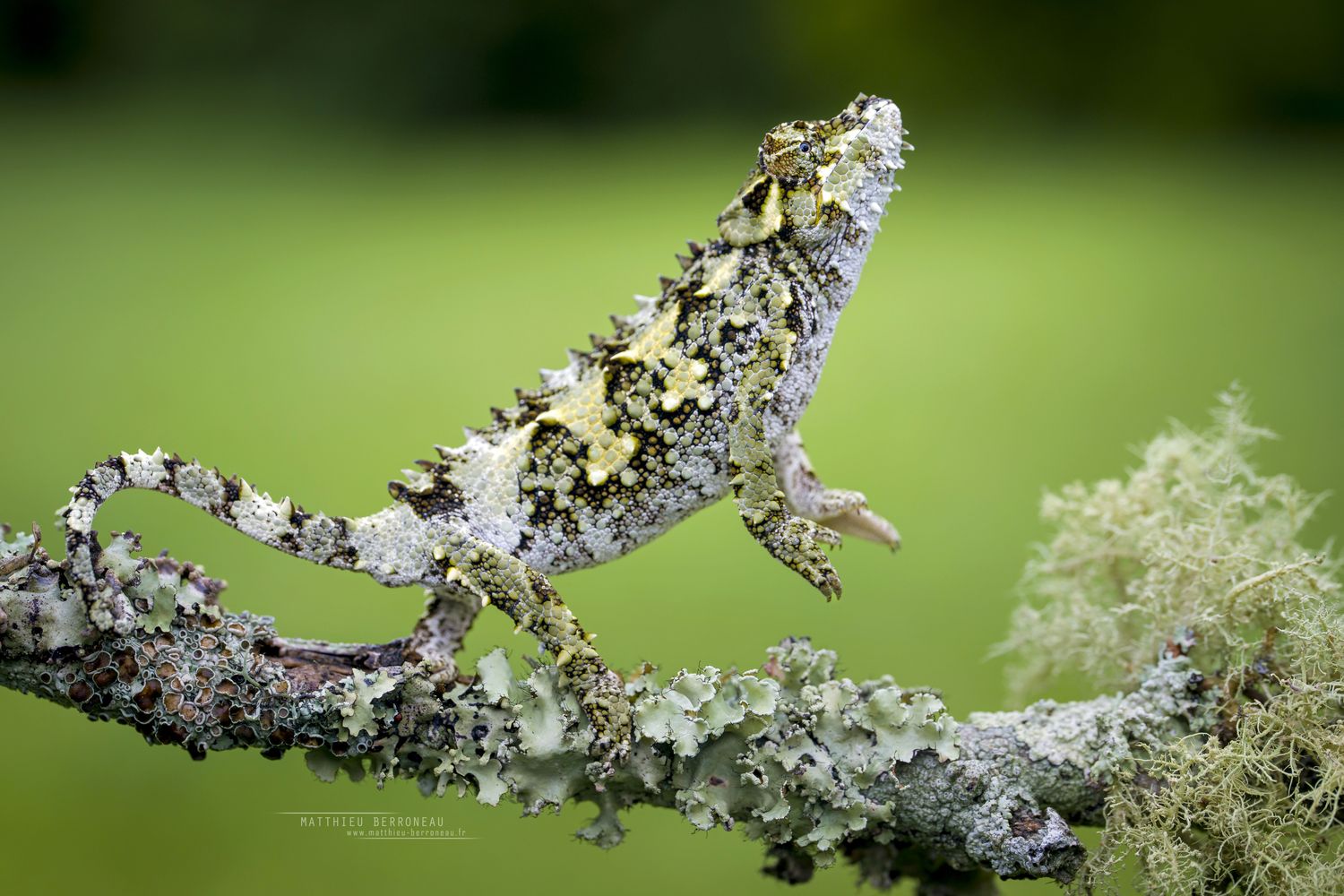
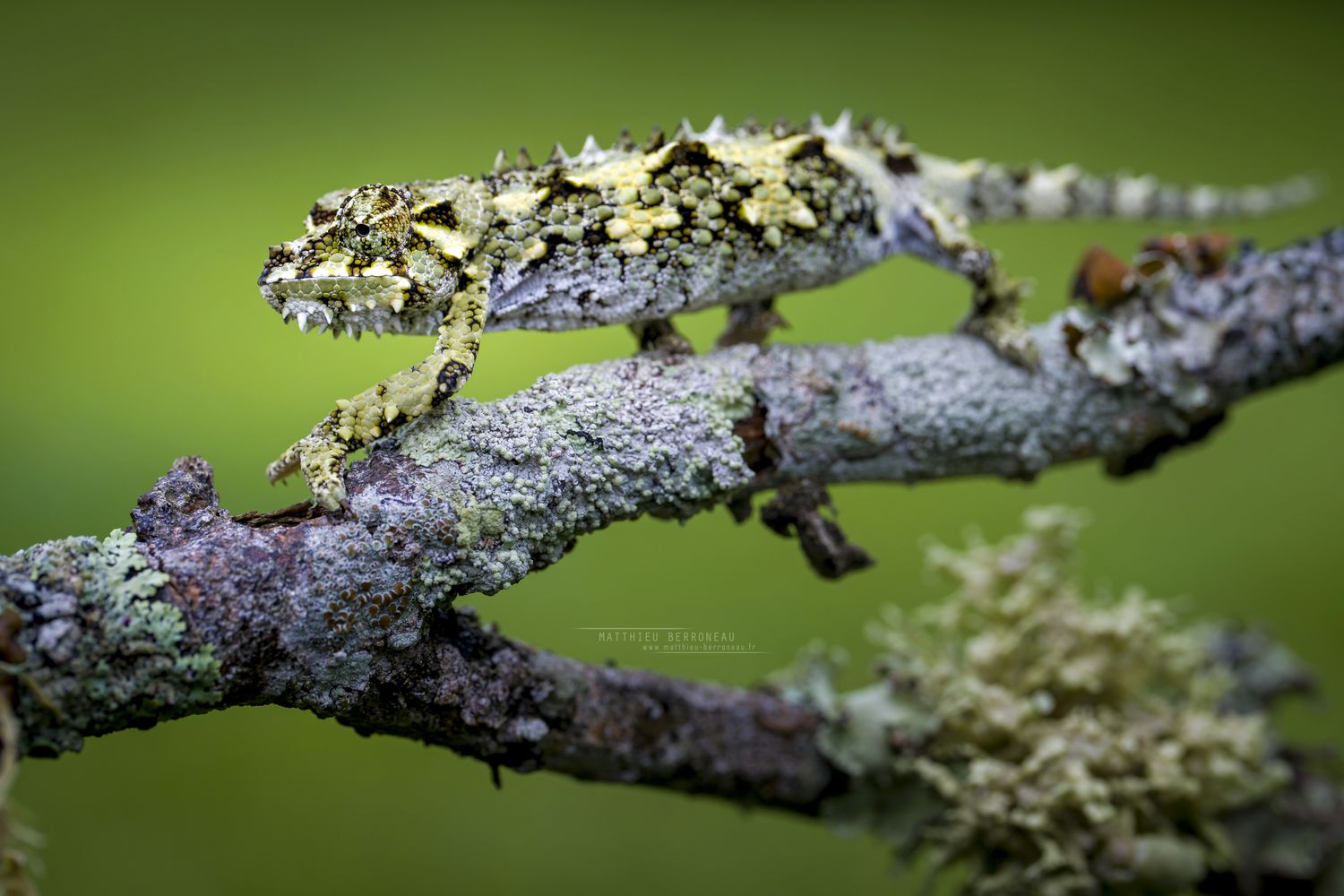
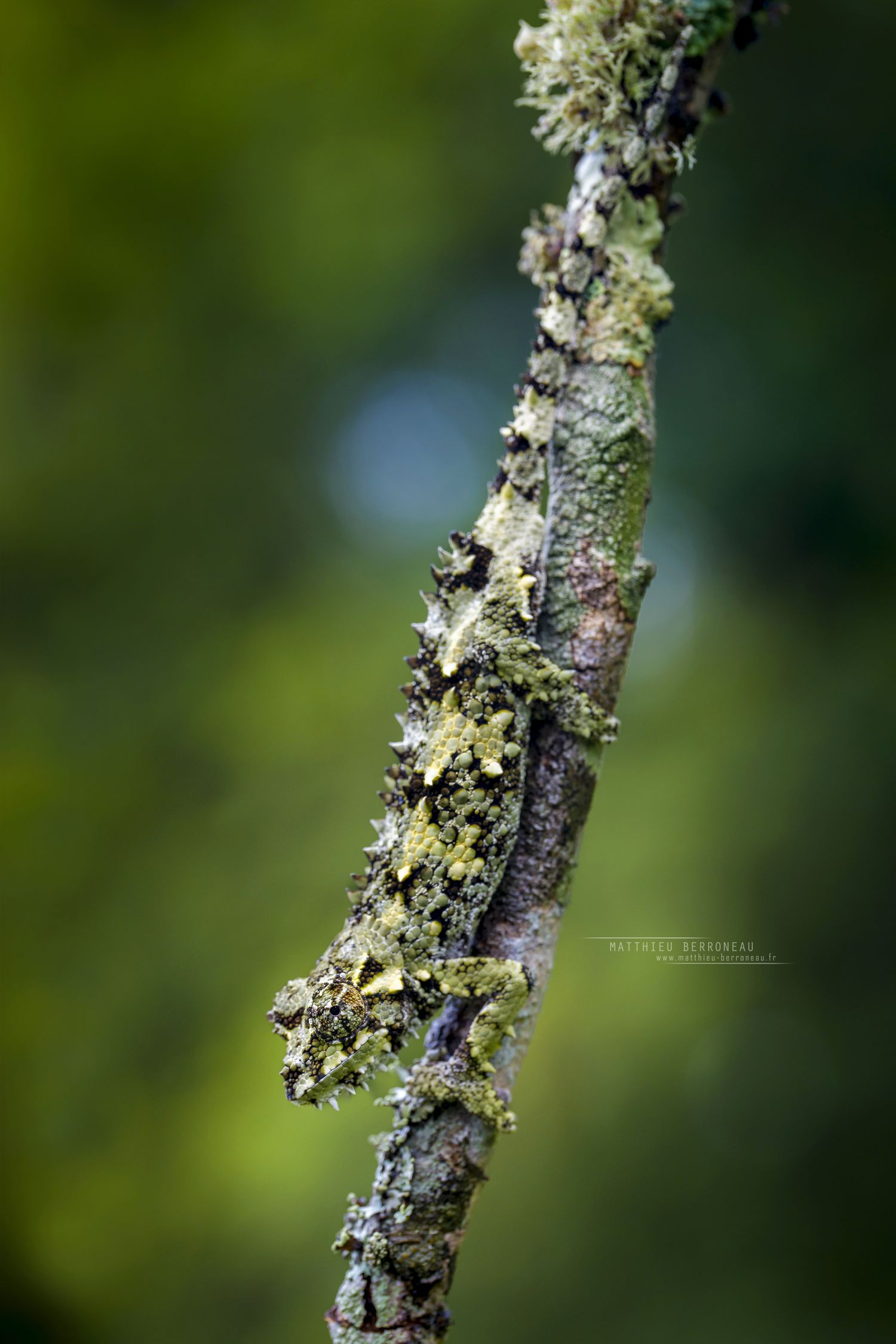
Trioceros laterispinis, caméléon endémique des montagnes d’Udzungwa. Spiny-flanked Chameleon Trioceros laterispinis, a chameleon endemic to the Udzungwa Mountains – Sony a7v & 100 macro GM, f5 1/200s iso 640.
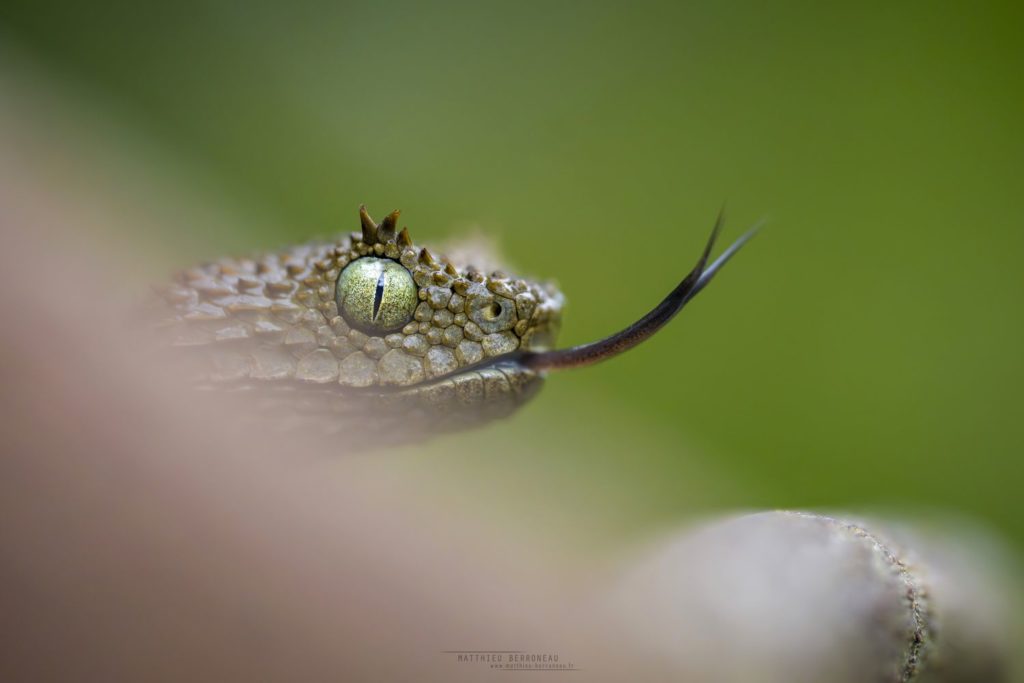
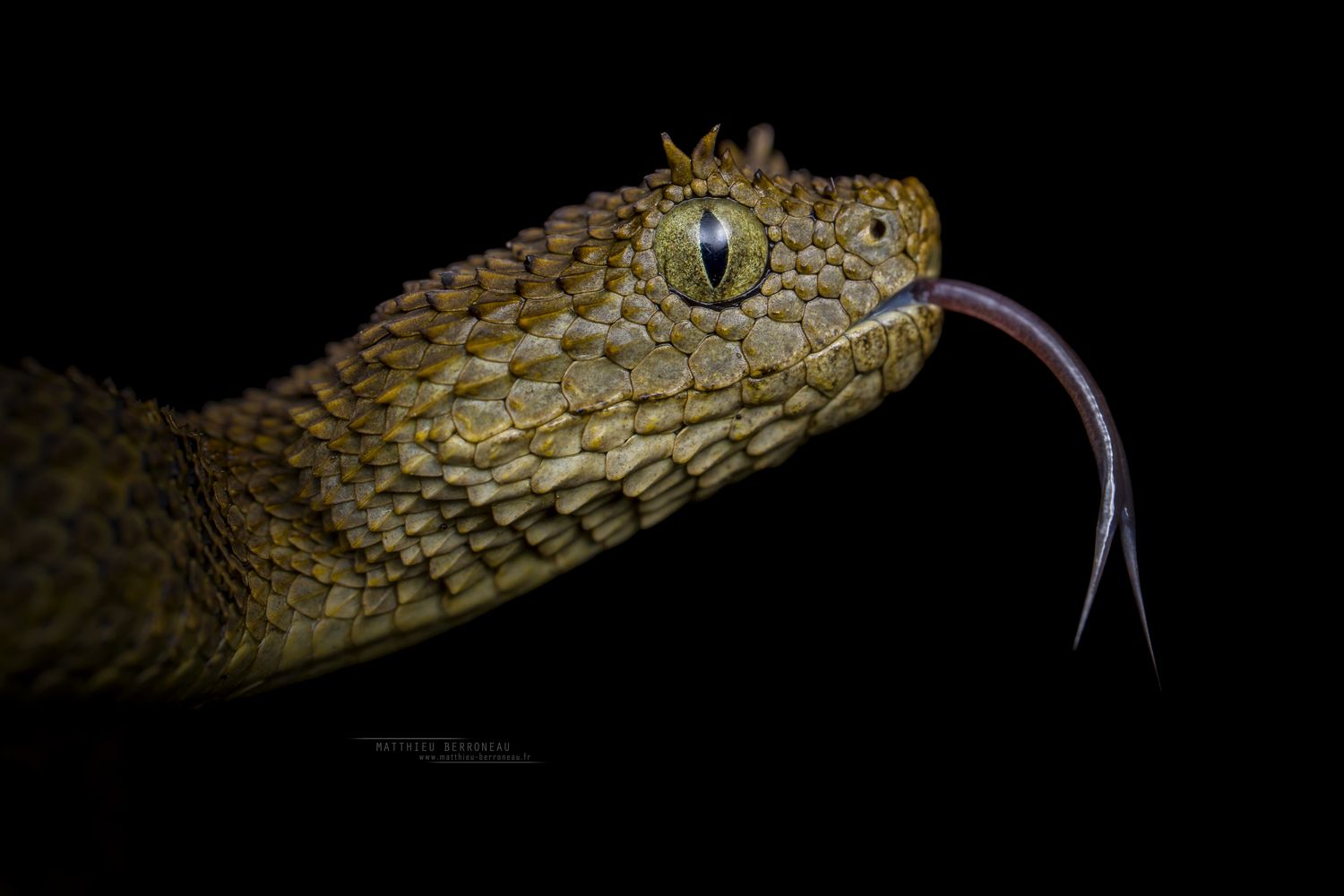
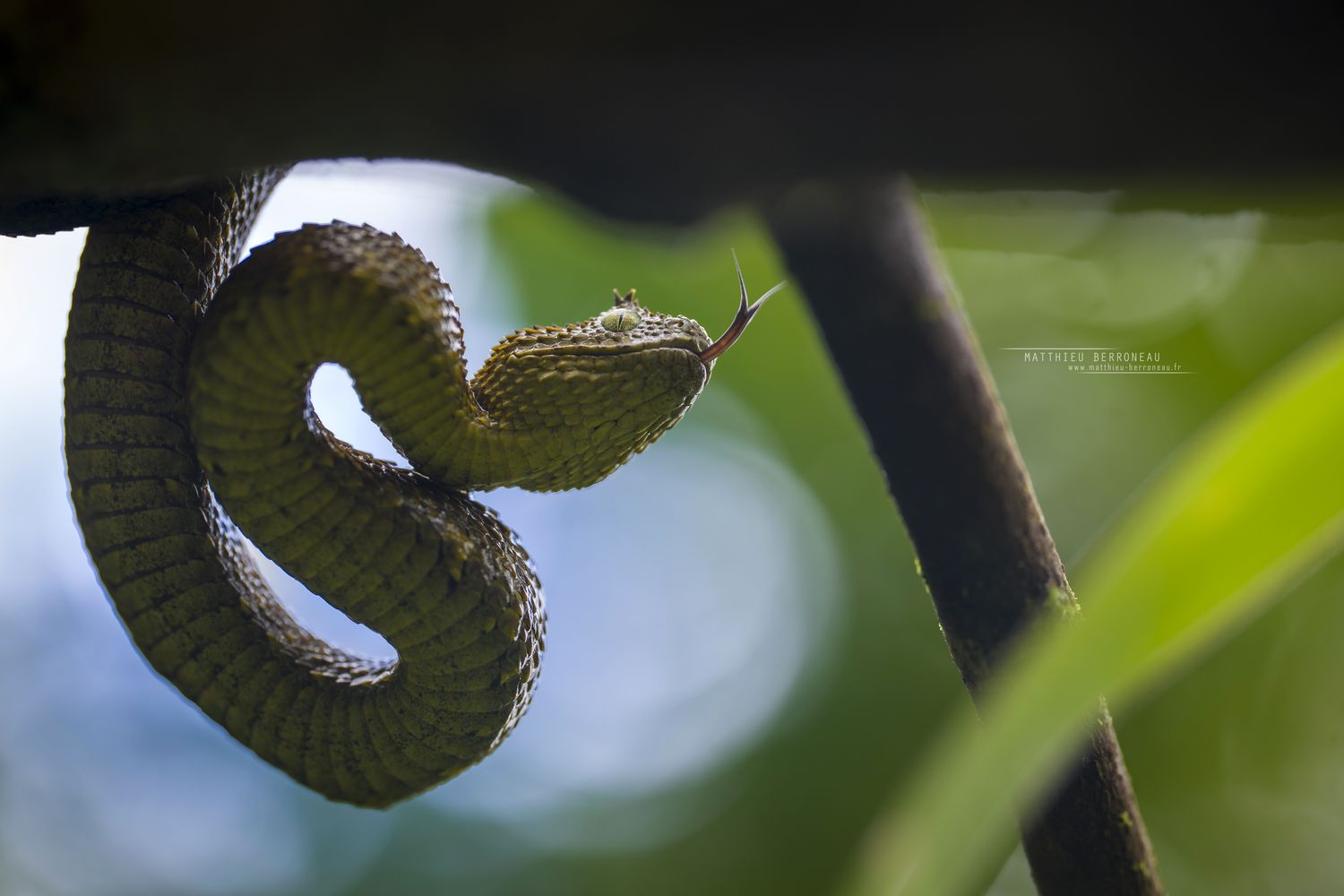
La fameuse et sublime Atheris ceratophora, endémique des montagnes tanzaniennes. The famous Usambara Eyelash Viper – Sony a7v & 100 macro GM, f2.8, 1/2000s iso 8000 !
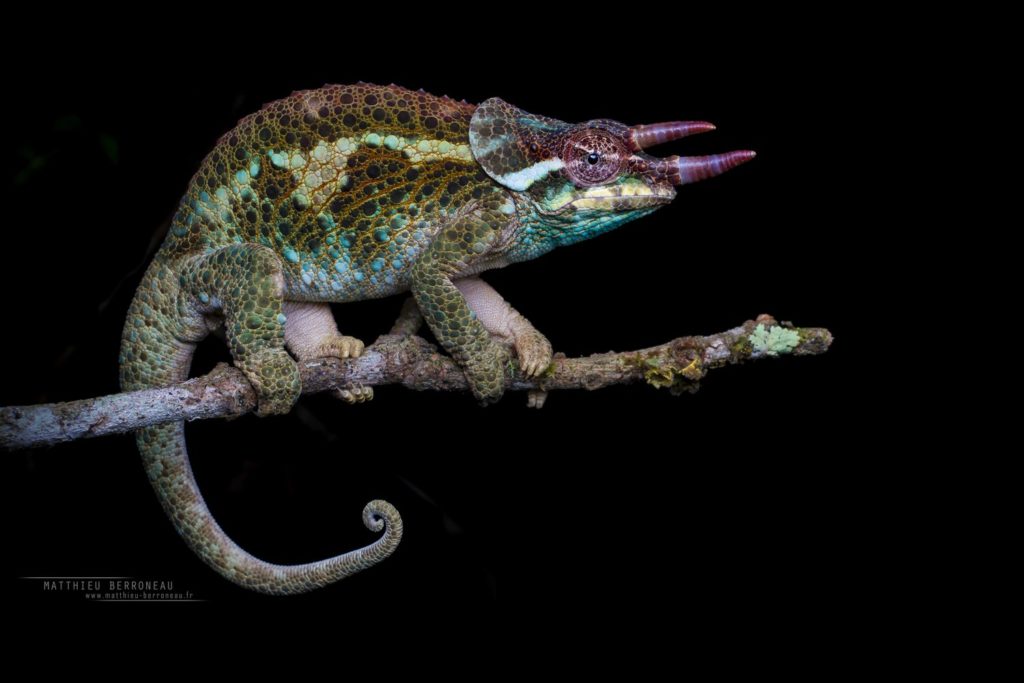
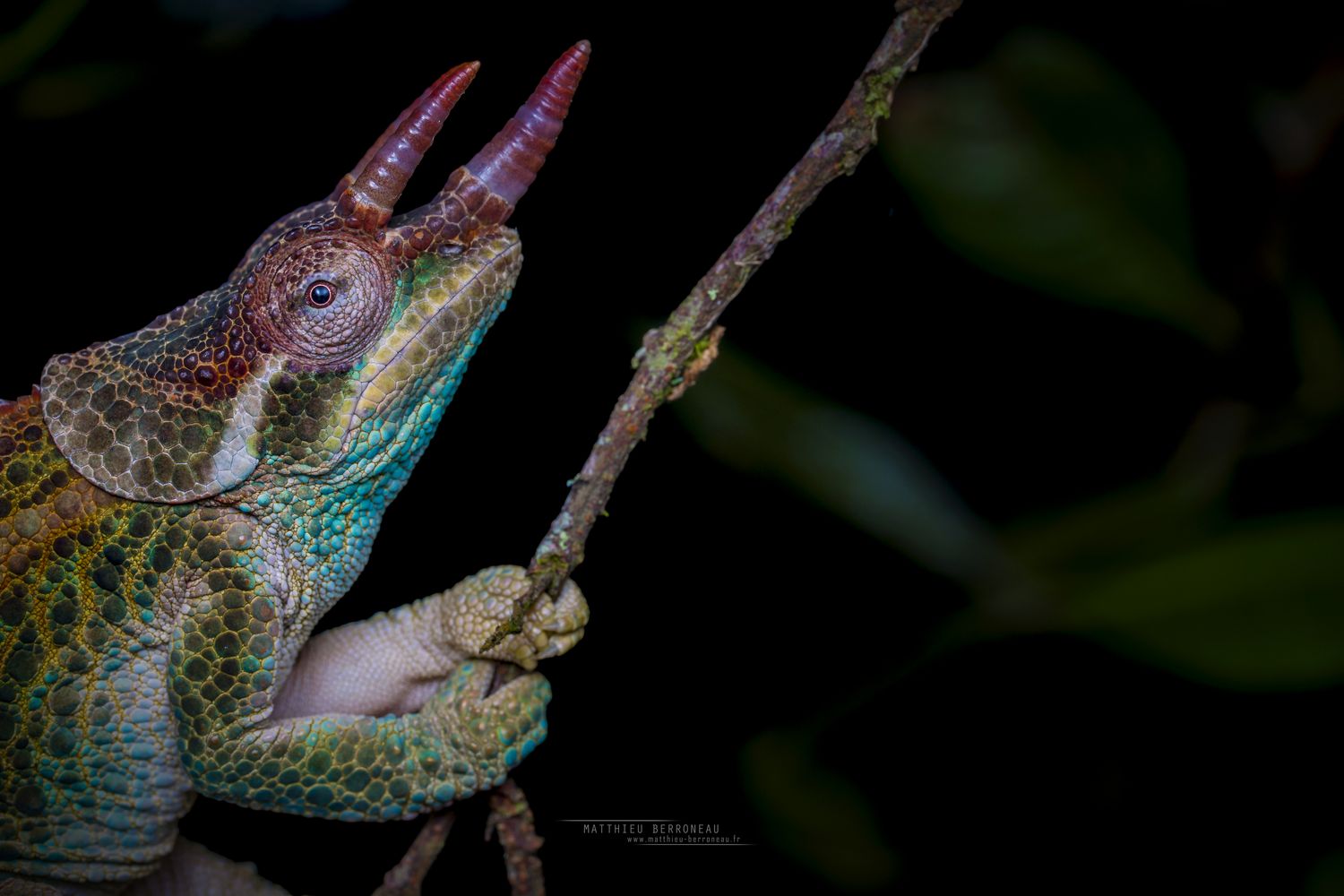
Un autre incroyable caméléon de Tanzanie : Trioceros werneri, mâle à trois cornes. Un other amazing chameleon from Tanzania : Werner’s Chameleon, tree horns male – Sony a7v & 100 macro GM, f11, 1/125s iso 320
Voici un cliché illustrant la puissance des fichiers raw et la dynamique du boîtier. Une photo de caméléon, de nuit, au flash… Le passage à la moulinette du fichier raw laisse ressortir depuis les ombres une ambiance lumineuse quasi invisible sur le fichier d’origine. Sur grand écran, à plein résolution, le rendu est sublime !
Here is a photo illustrating the power of raw files and the dynamic range of the camera. A photo of a chameleon, taken at night with a flash… Processing the raw file brings out shadows and a luminous atmosphere that was almost invisible in the original file. In full size screen, and high definition, the result is stunning!
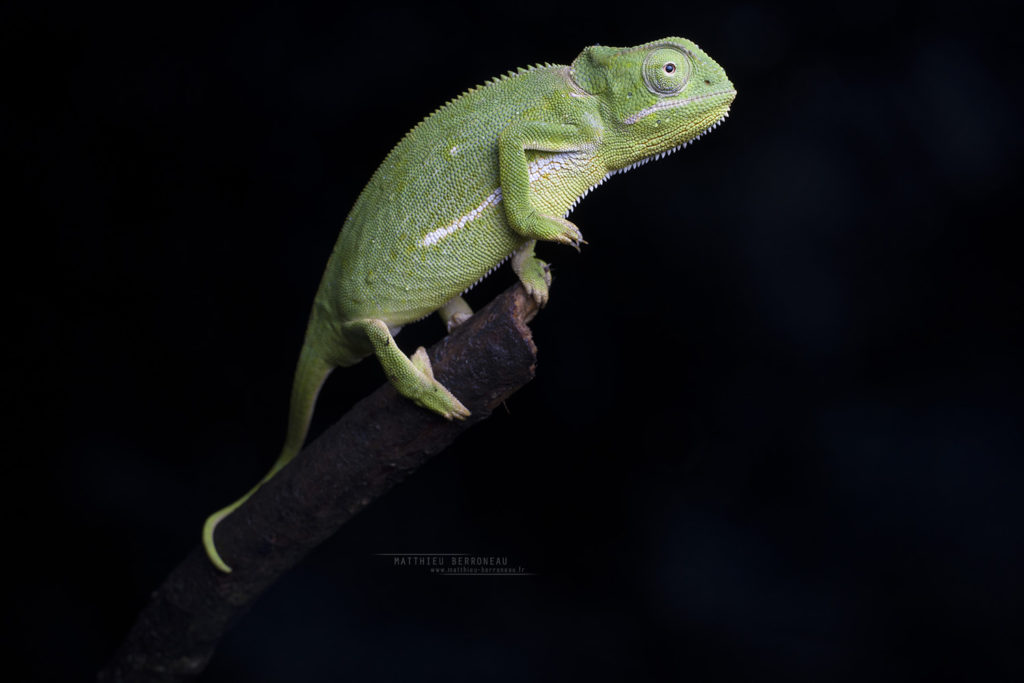
Chamaeleo dilepis. Fichier original, avant développement du fichier raw. Flap-necked Chameleon Chamaeleo dilepis. Original file, before developing the raw file.
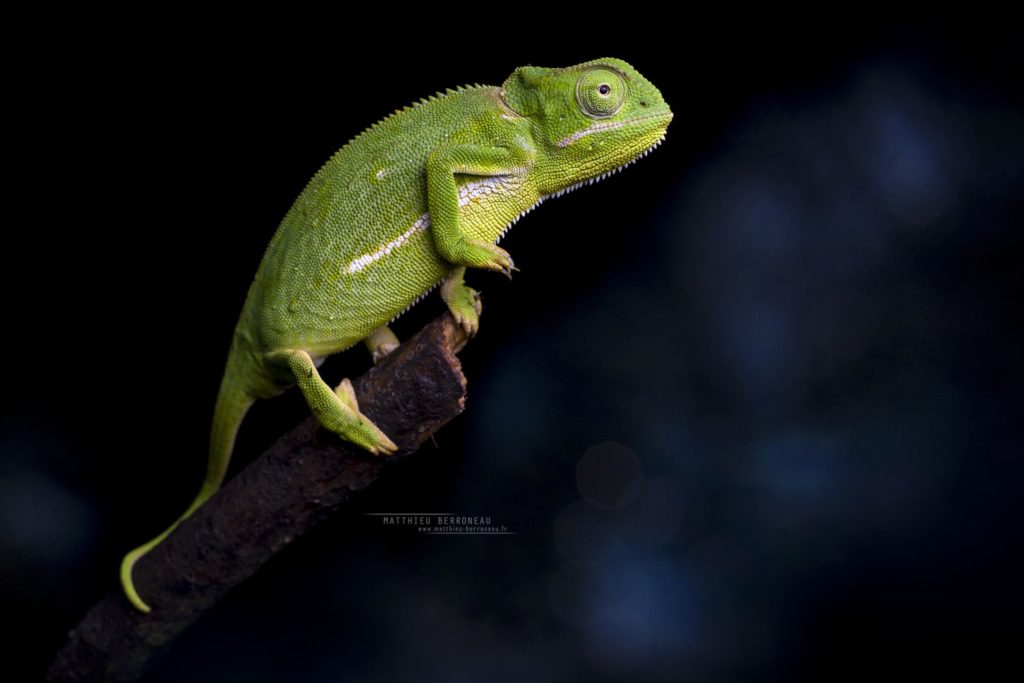
Rendu après post-traitement. Rendering after post-processing – Sony a7v & 20-70G, f10, 1/125s iso 250
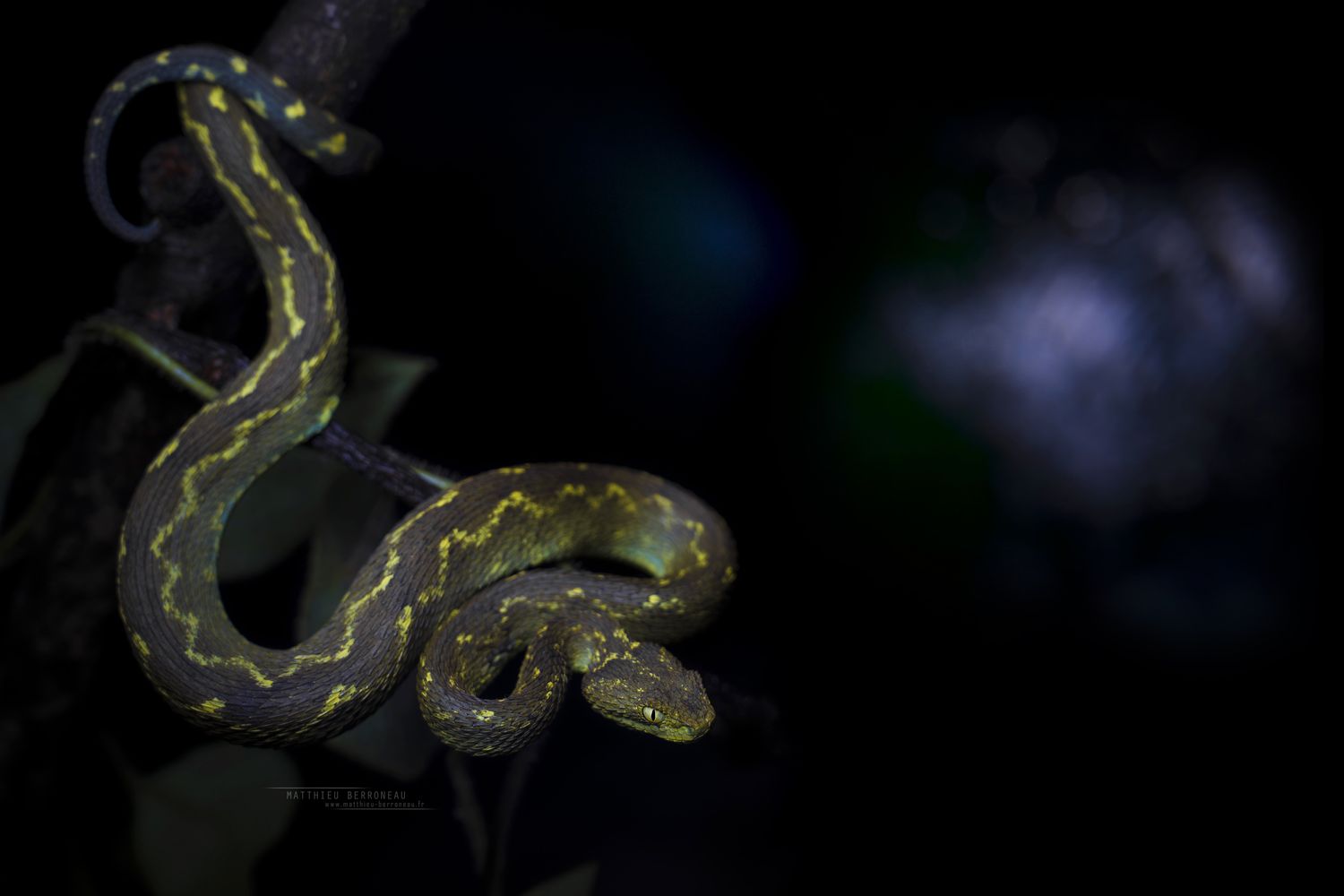
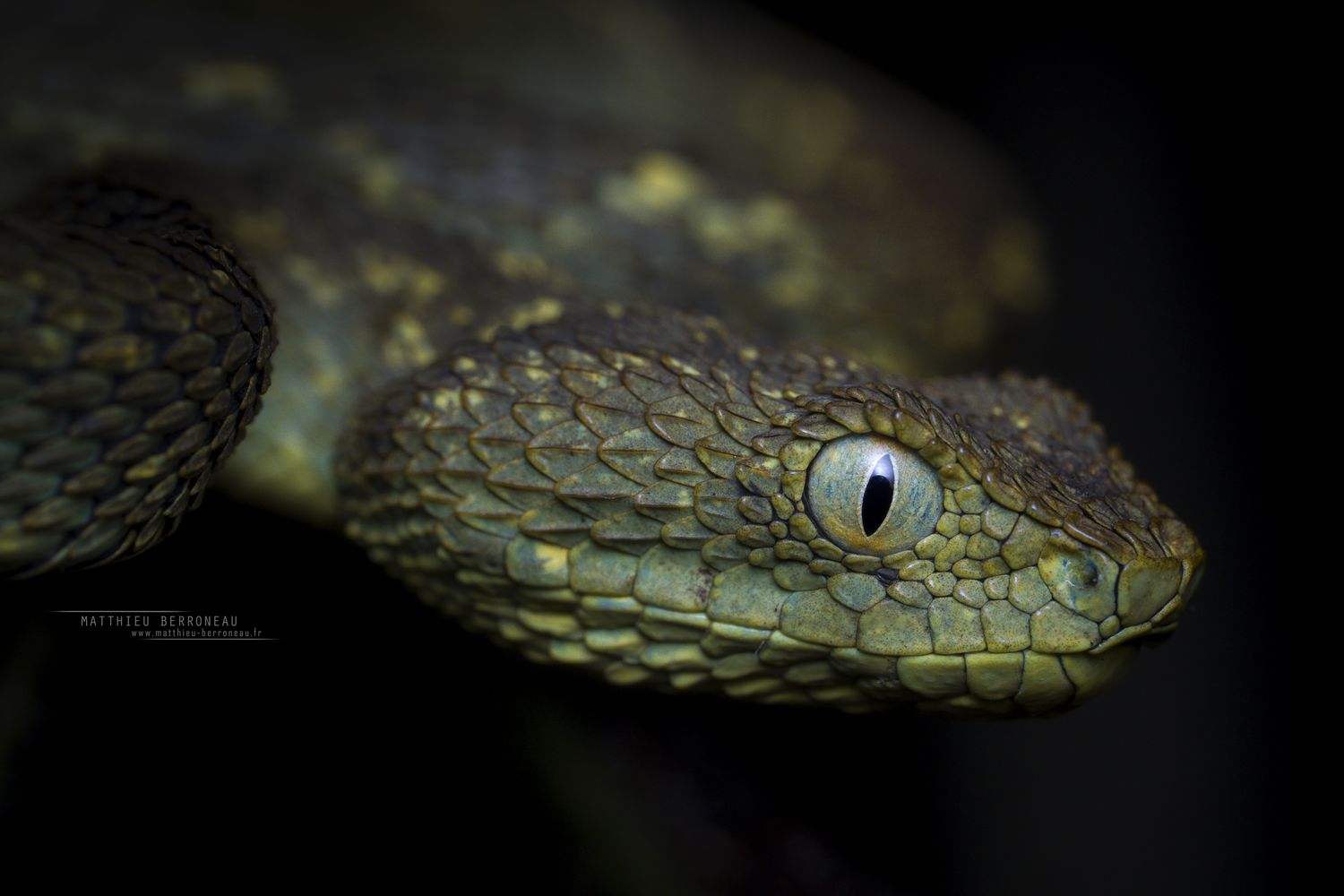
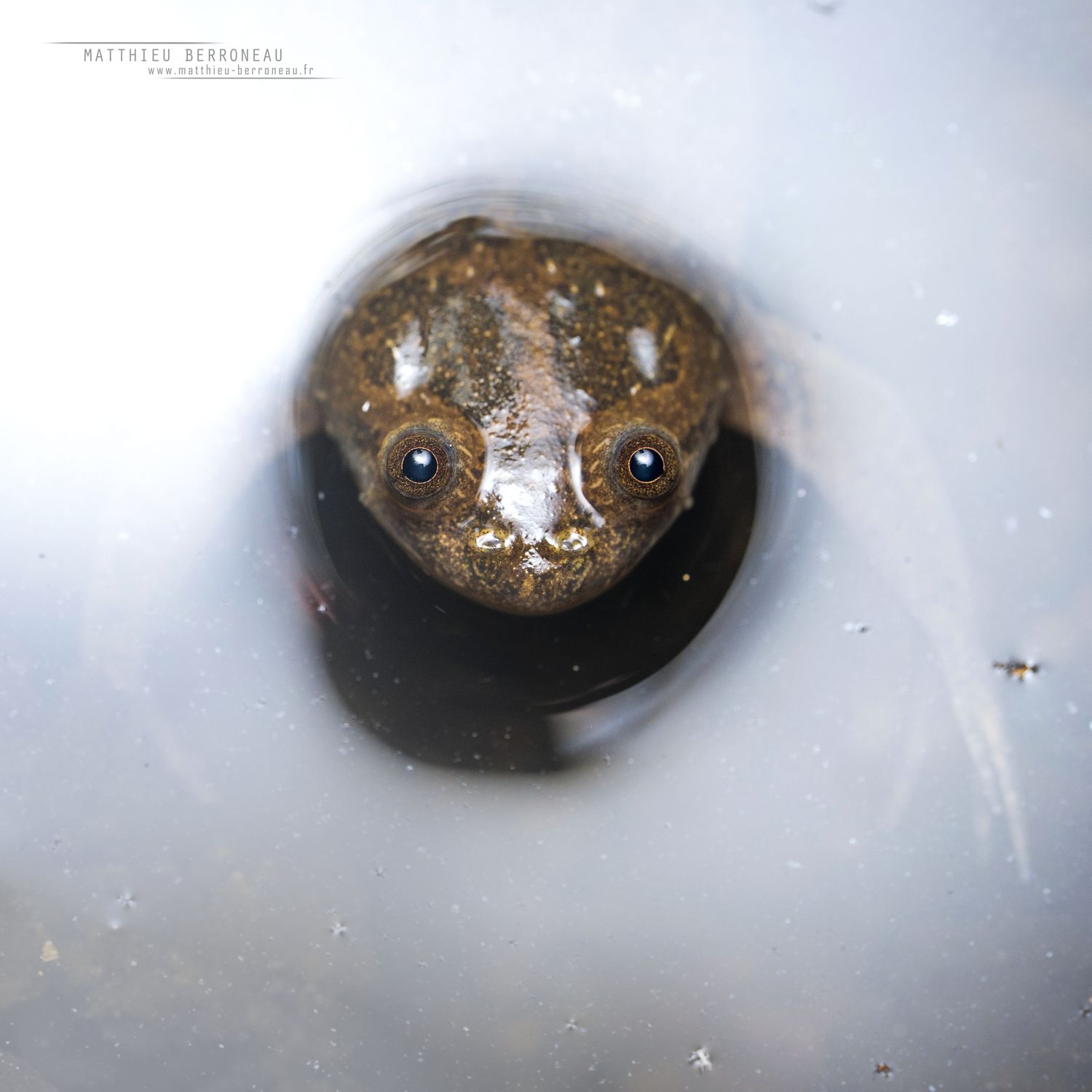
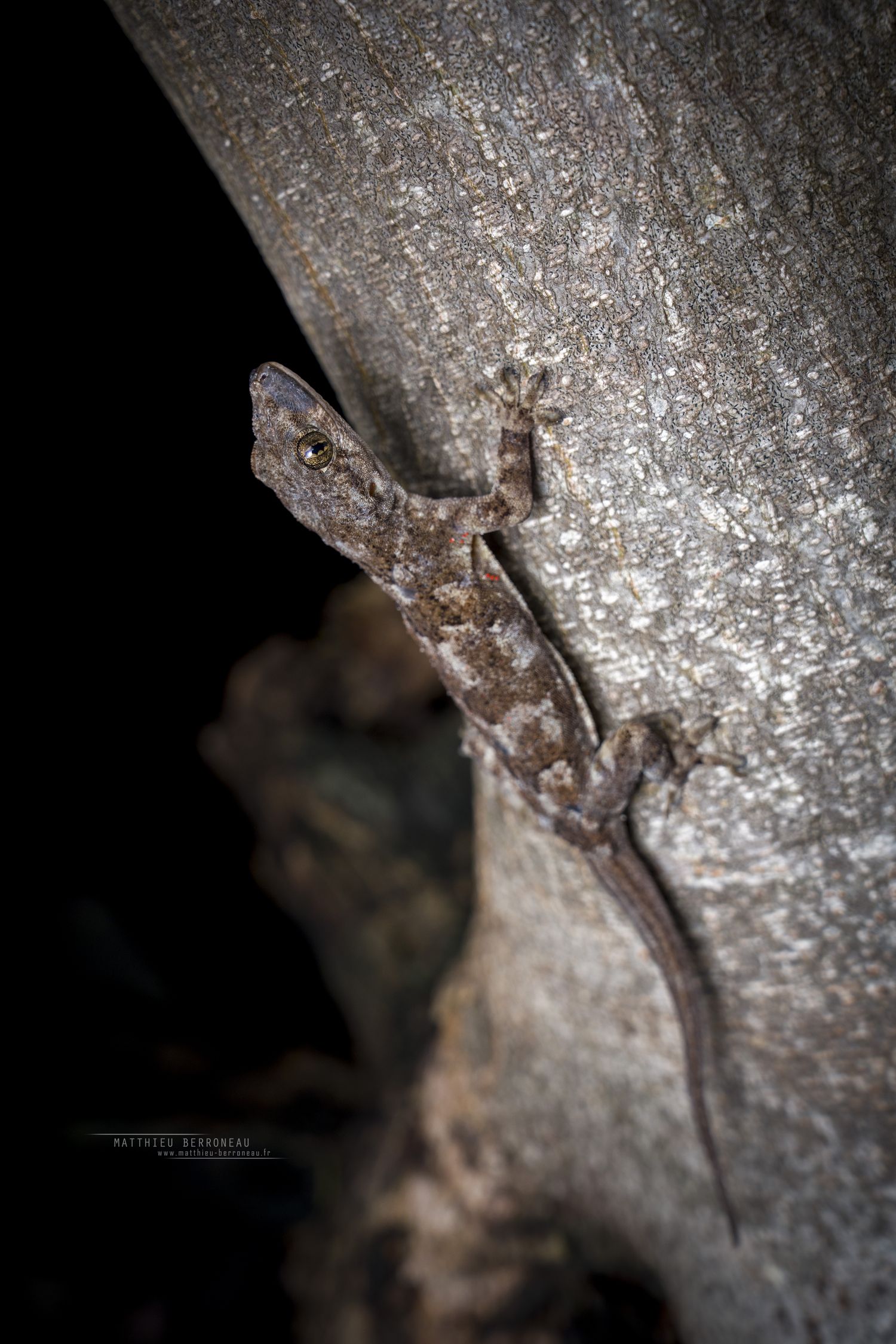
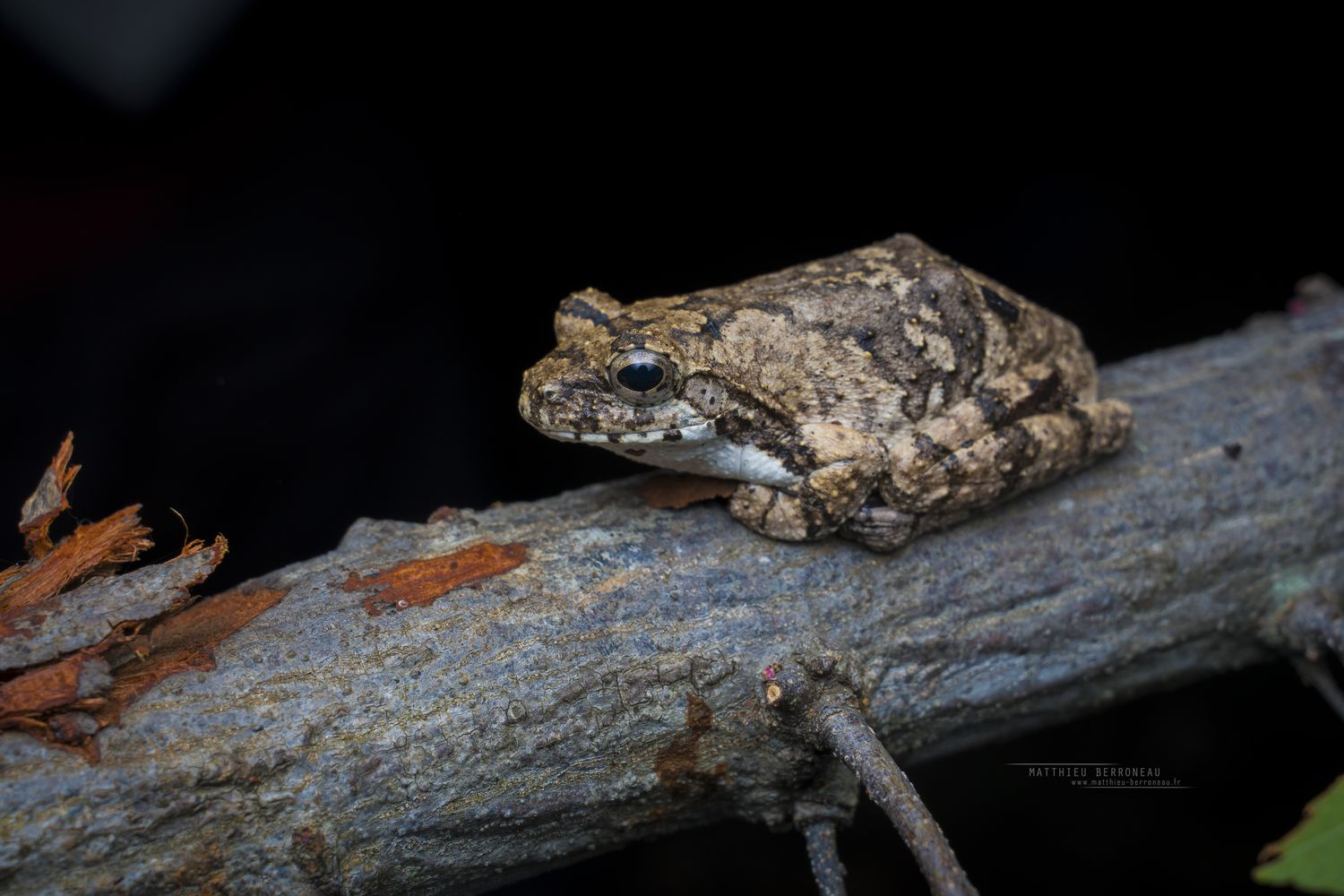
Le Sony a7v impressionne aussi par sa réactivité générale. Face à mon précédent Sony a7iii, et même face au Sony a7Cii, la différence est notable. Le boitier est rapide que ce soit dans son utilisation générale (mise sous tension du boitier, navigation dans le menu, lecture des photos, déplacements des curseurs) que par son autofocus, une vrai bombe ! J’ai pu également réaliser mes premiers clichés via la pré-capture, une option que j’attendais avec impatience. Et là encore, c’est un régal ! Avec la précapture et la rafale à 30 images/seconde, de nombreux photos auparavant difficiles à obtenir sont désormais garanties. C’est presque de la triche. Notons également la conservation du stacking focus, utilisable à main levée, dont je me sers régulièrement.
The Sony a7v also impresses with its overall responsiveness. Compared to my previous Sony a7iii, and even the Sony a7Cii, the difference is particularly noticeable. The camera is fast in terms of both general use (powering up, navigating the menu, viewing photos, moving the cursors) and autofocus, which is a real powerhouse! I was also able to take my first shots using pre-capture, a feature I had been eagerly awaiting. And once again, it’s a treat! With pre-capture and burst mode at 30 frames per second, many photos that were previously difficult to obtain are now guaranteed. It’s almost like cheating. Also note that focus stacking option is still here, which can be used handheld and which I use regularly.
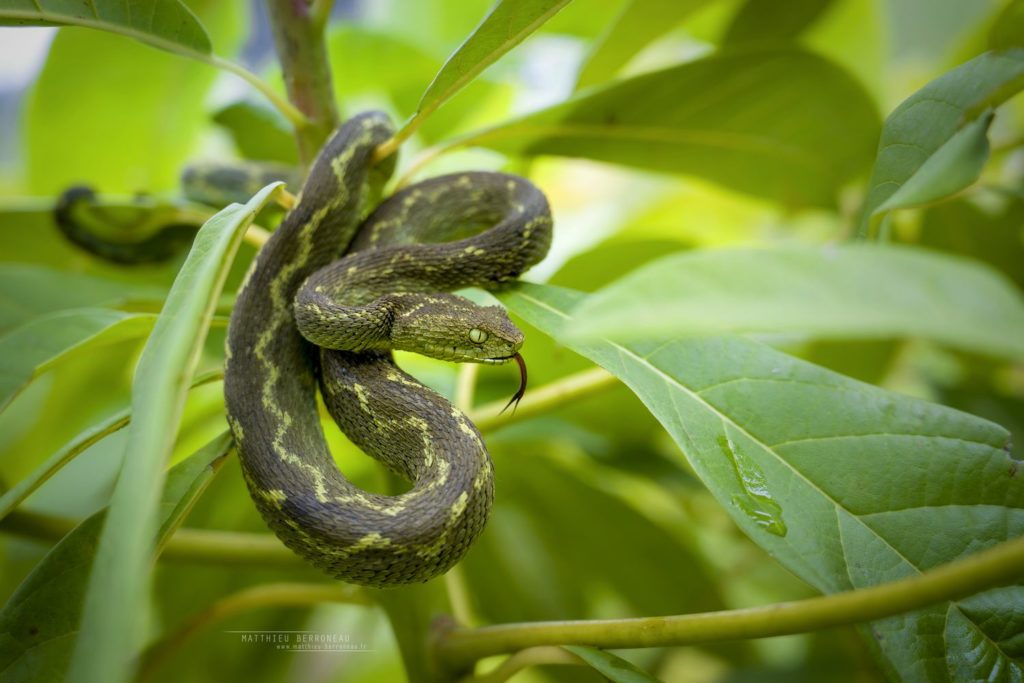
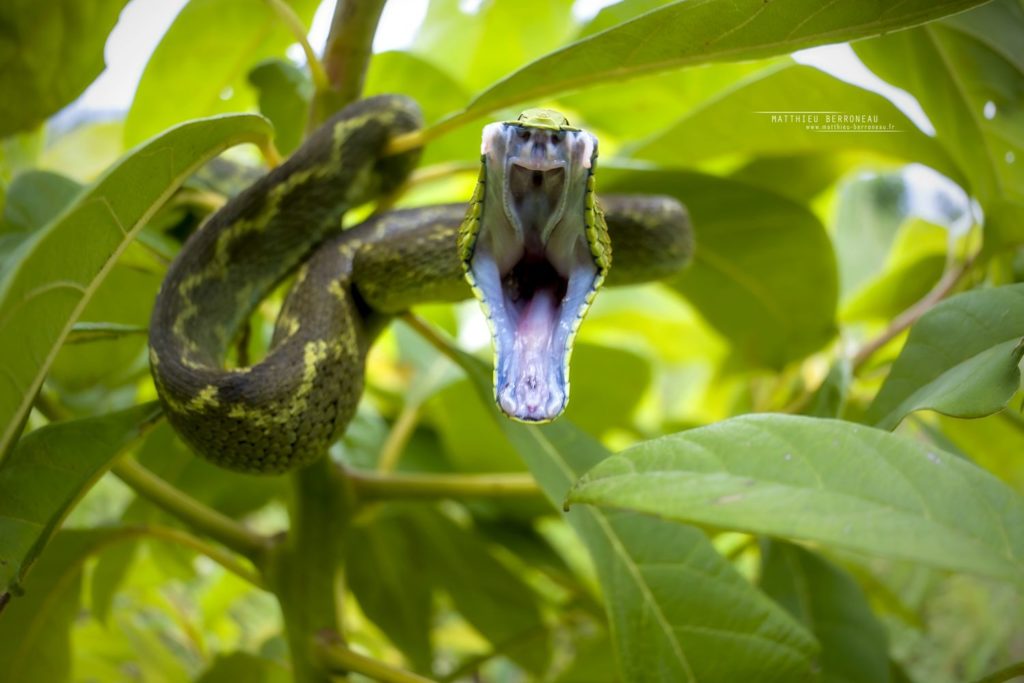
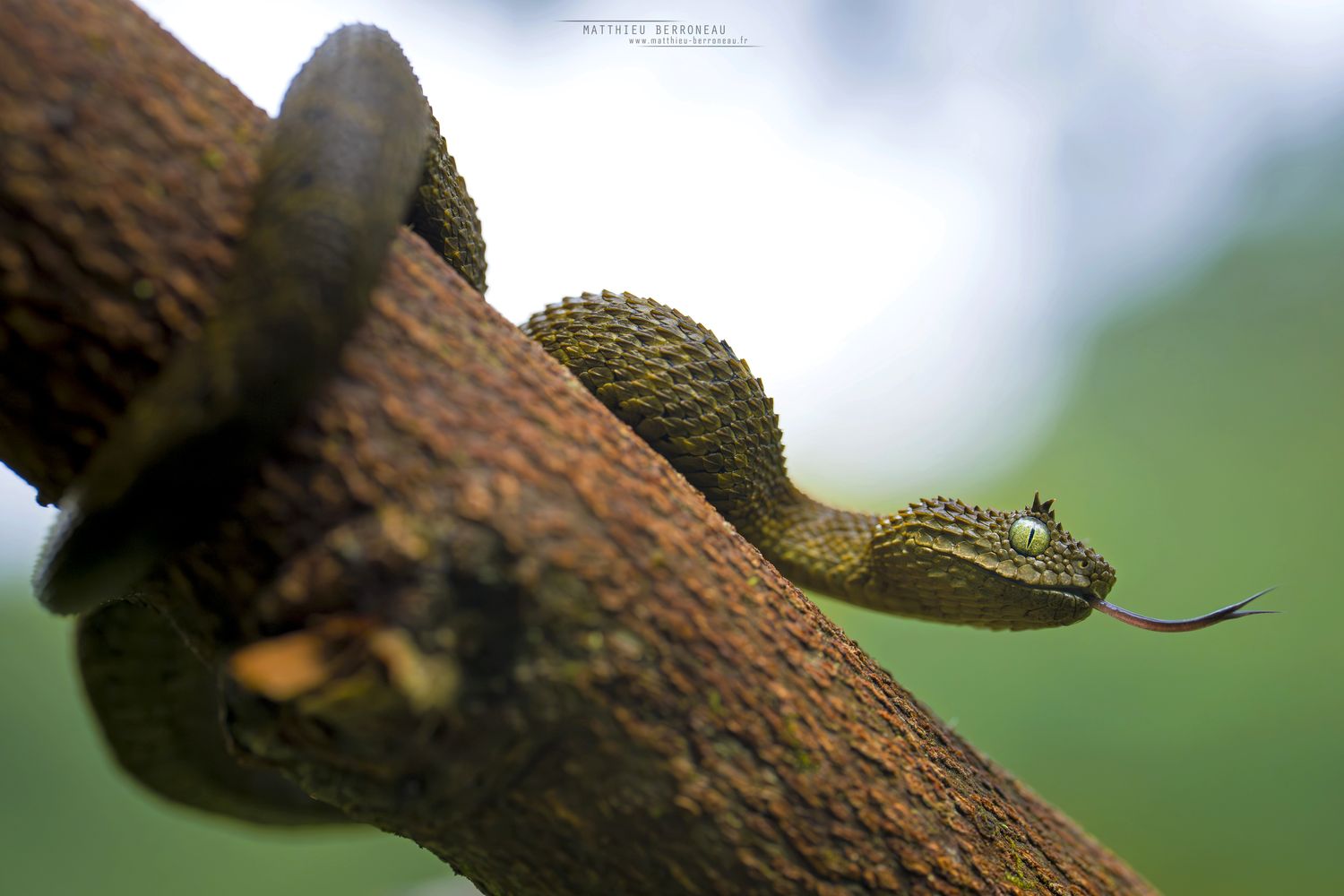
La magnifique Atheris rungweensis, gueule ouverte. Une photo désormais facile à obtenir grâce à la pré-capture. The magnificent Rungwe Bush Viper Atheris rungweensis, mouth open. A photo that is now easy to obtain thanks to pre-capture. Sony a7v & 20-70G, f6.3, 1/800s iso 1600
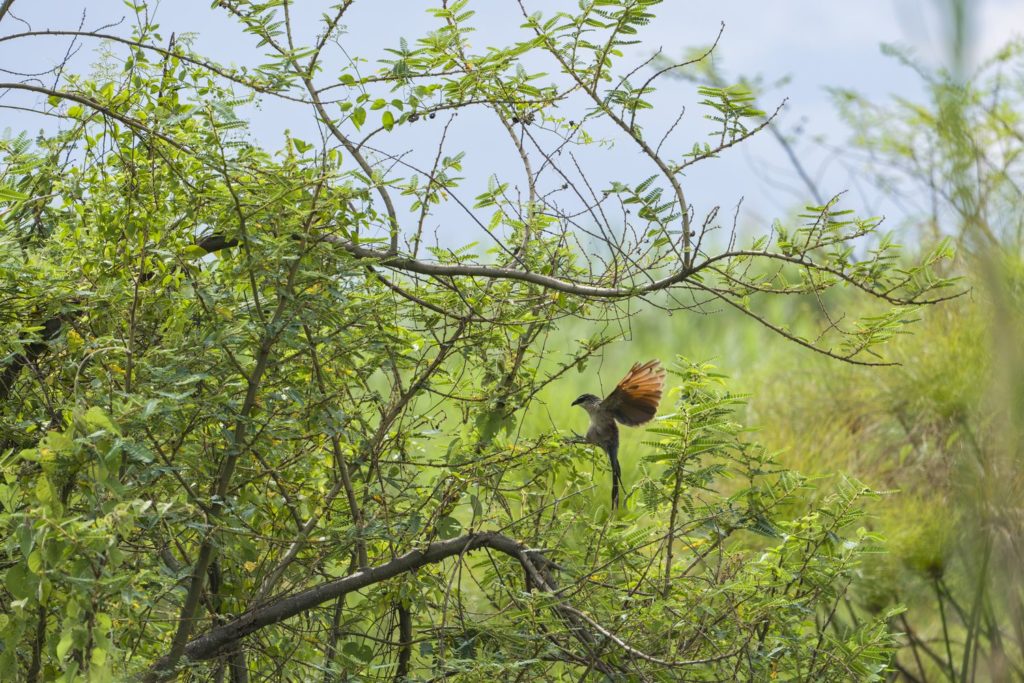
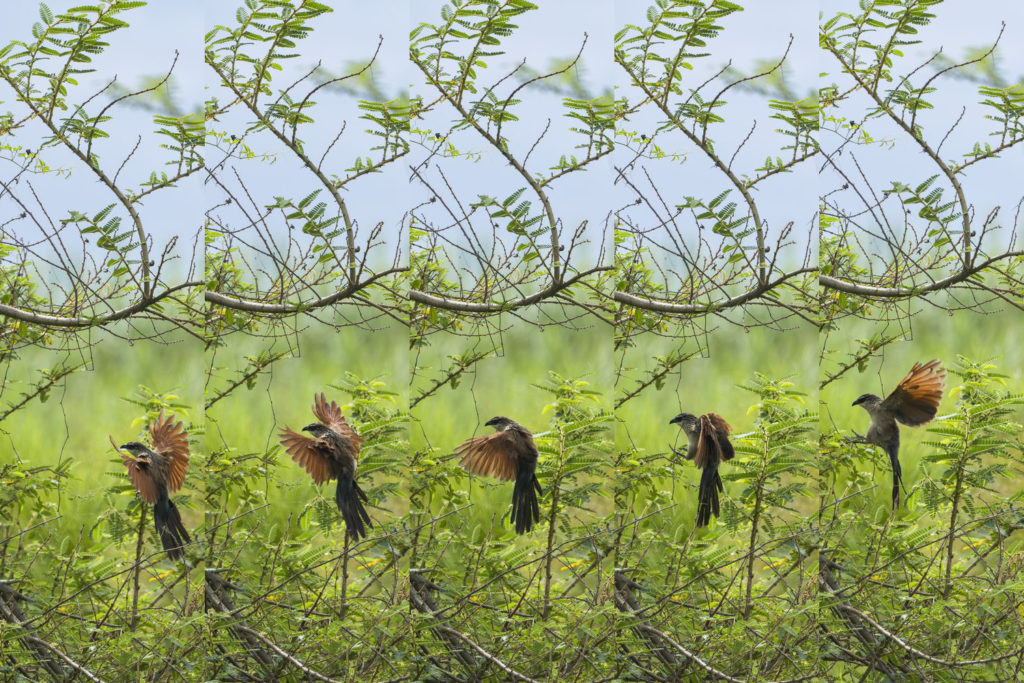
Série en rafale sur un Coucal à sourcils blancs Centropus superciliosus – White-browed Coucal in flight, 30 im/s. Sony a7v & 100-400G, f5.6, 1/2000s iso 400
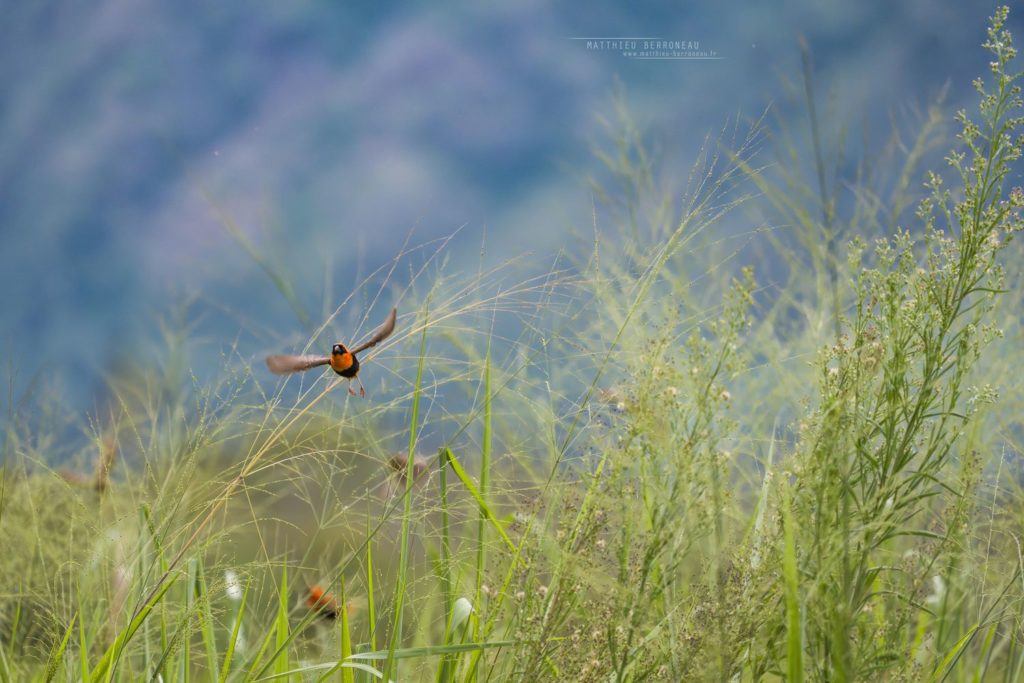
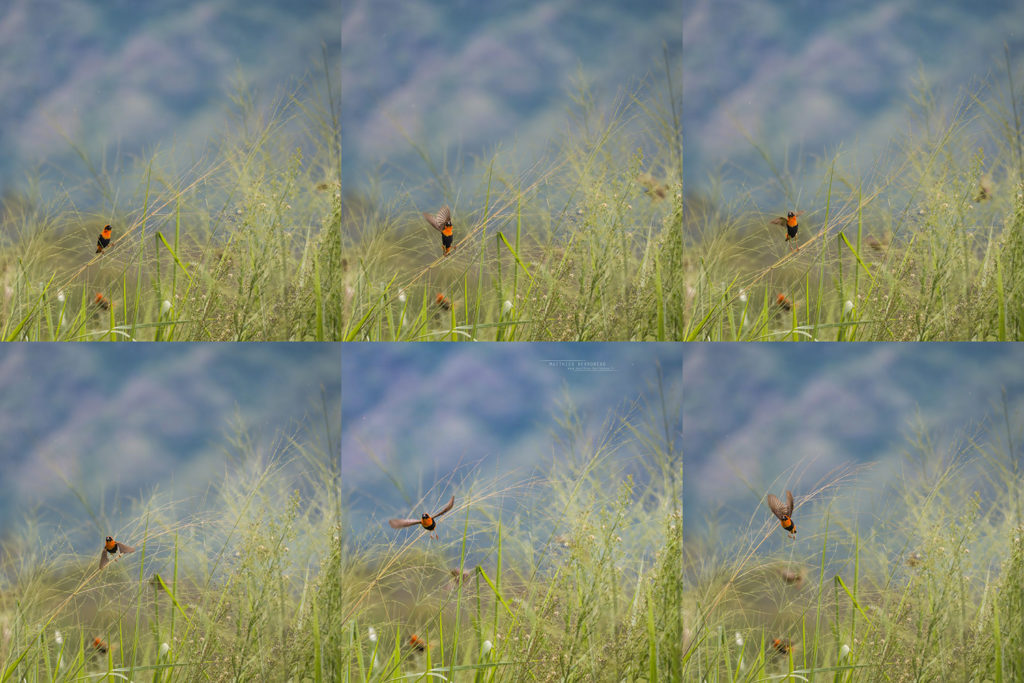
Photographier la phase d’envol chez Euplectes orix est désormais un jeu d’enfant – Photographing the takeoff phase of this Red Bishop is now a so easy… Sony a7v & 100-400G, f5.6, 1/2000s iso 4000
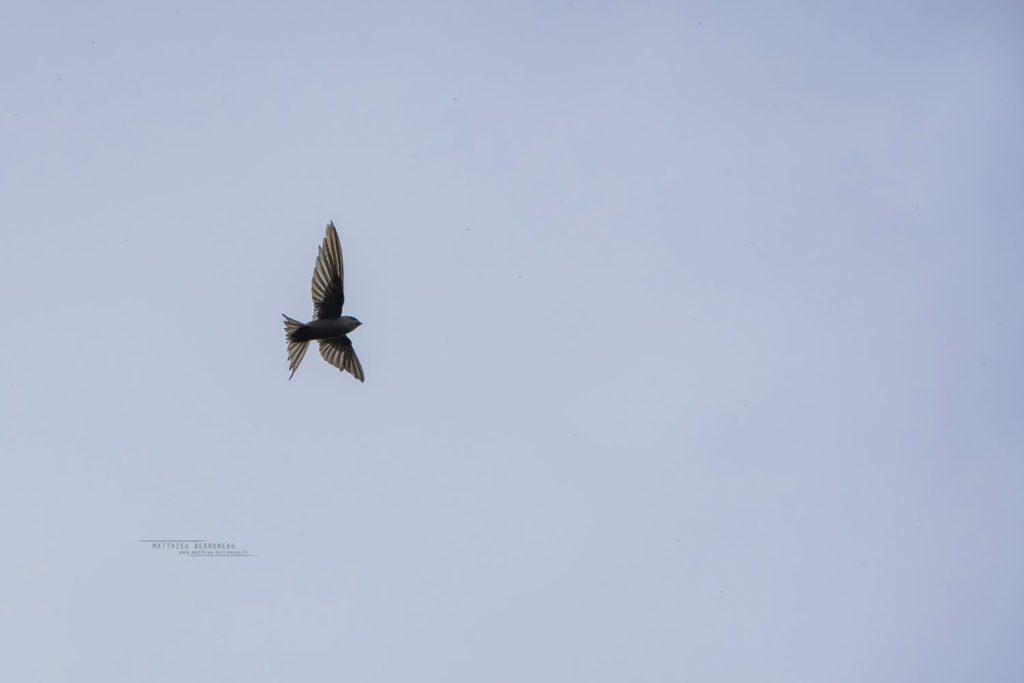
Dynamique du capteur, autofocus ultrapide, on apprécie même les détails chez ce lointain martinet. Sensor dynamics, ultra-fast autofocus—you can even appreciate the details of this distant swift. Sony a7v & 100-400G, f5.6, 1/2000s iso 320
La prise en main générale apporte un excellent plaisir d’utilisation. Je retrouve le plaisir que j’avais à manipuler le Sony a7iii (en mieux !), et qui disparait lorsque j’utilise le Sony a7cii. Le viseur est meilleur que le celui du a7iii (et bien mieux que celui du Sony a7cii), l’écran bien supérieur, la poignée plus large est agréable. Bref, c’est tout bon ! Autre détail, et non des moindres : l’autonomie est désormais bluffante. On atteint pas encore celle des anciens reflex, mais le changement est flagrant en comparaison avec les précédents boitiers, qui n’étaient pourtant déjà pas ridicules… On n’y pense pas sur le terrain, mais c’est tout simplement génial.
The overall handling makes it a real pleasure to use. I rediscover the pleasure I had when using the Sony a7iii (even better!), which disappears when I use the Sony a7cii. The viewfinder is better than that of the a7iii (and much better than that of the Sony a7cii), the screen is far superior, and the wider grip is comfortable. In short, it’s all good! Another detail, and not the least: the battery life is now impressive. It doesn’t quite match that of older SLRs, but the change is striking compared to previous models, which were already quite good… You don’t think about it in the field, but it’s just great.
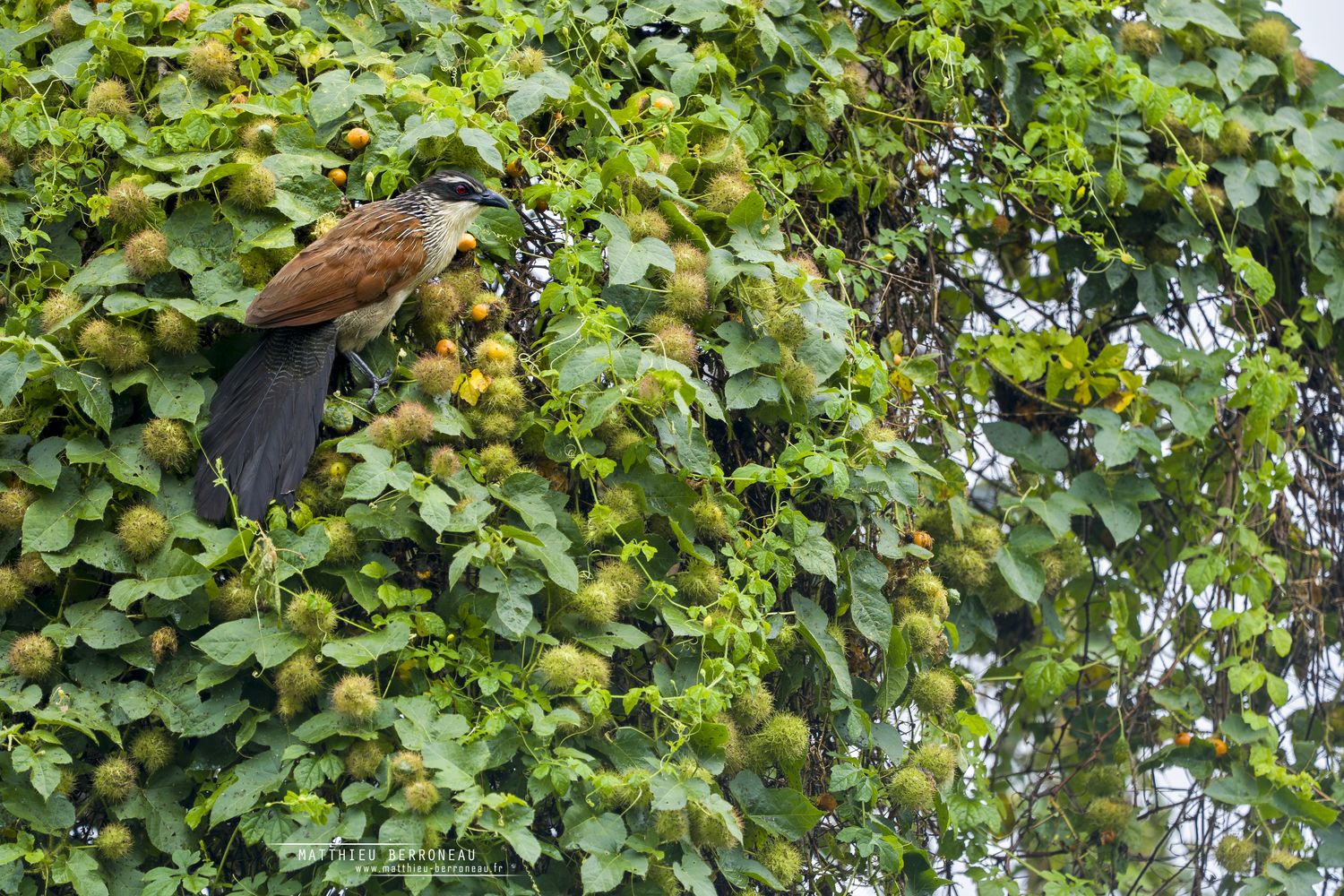
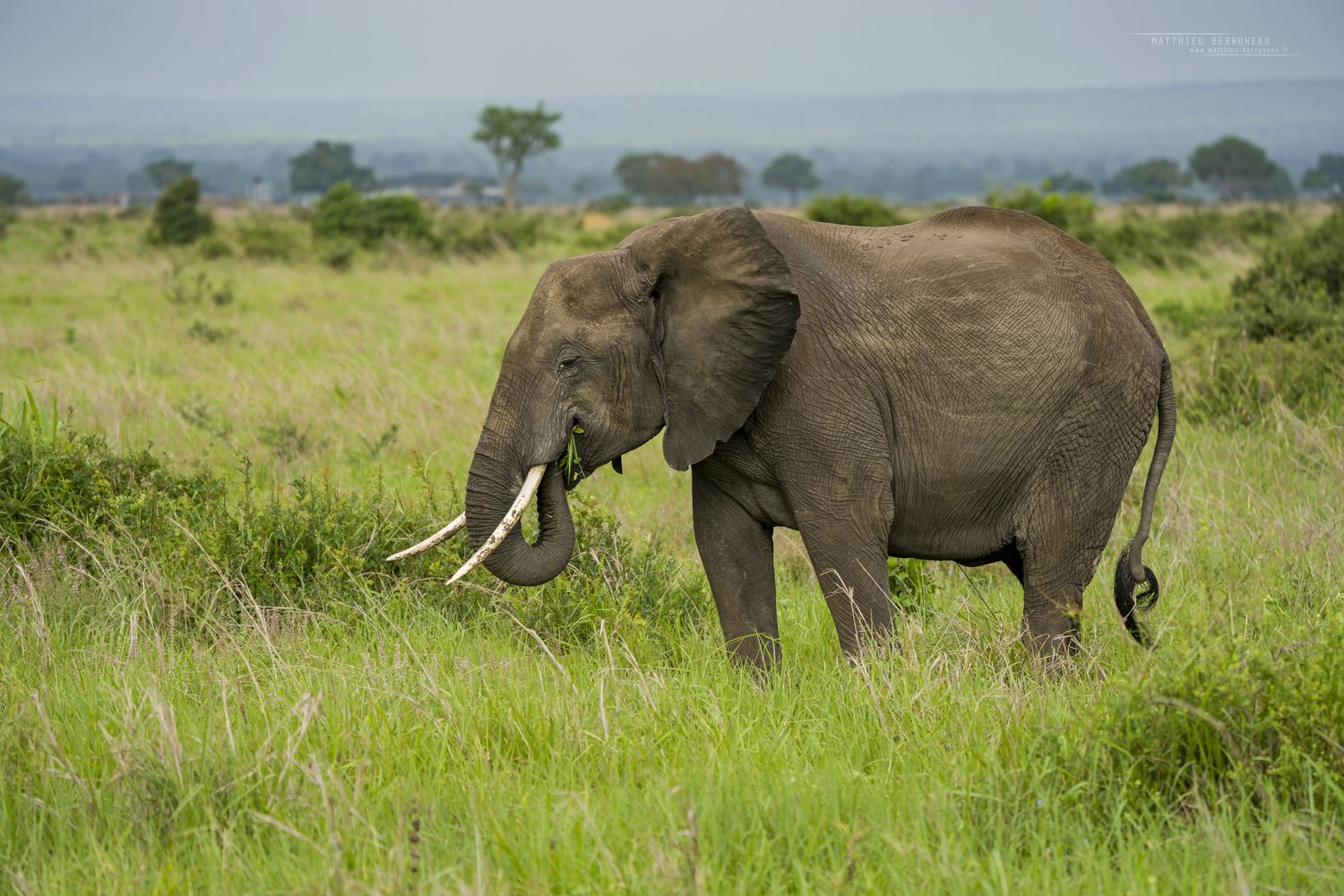
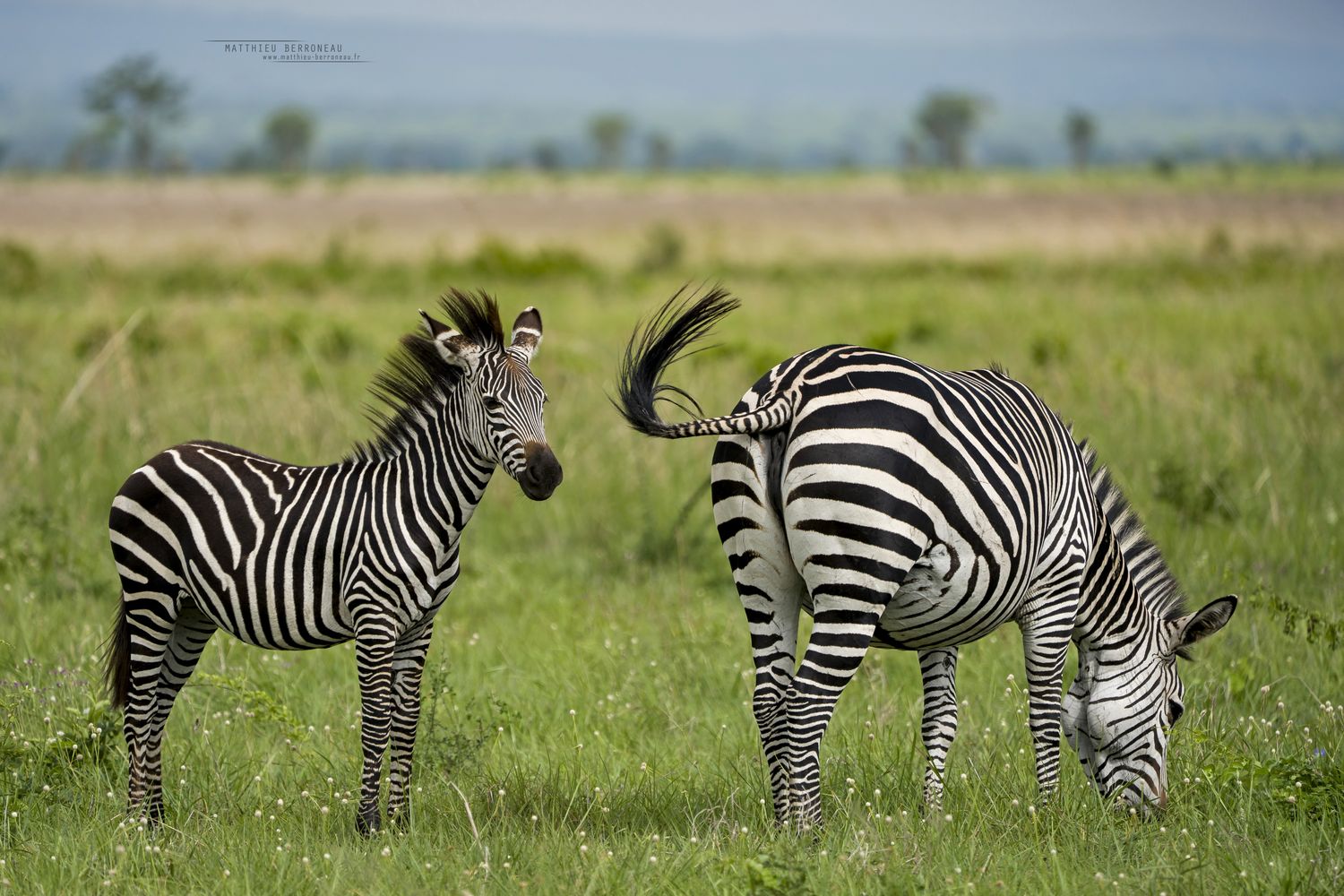
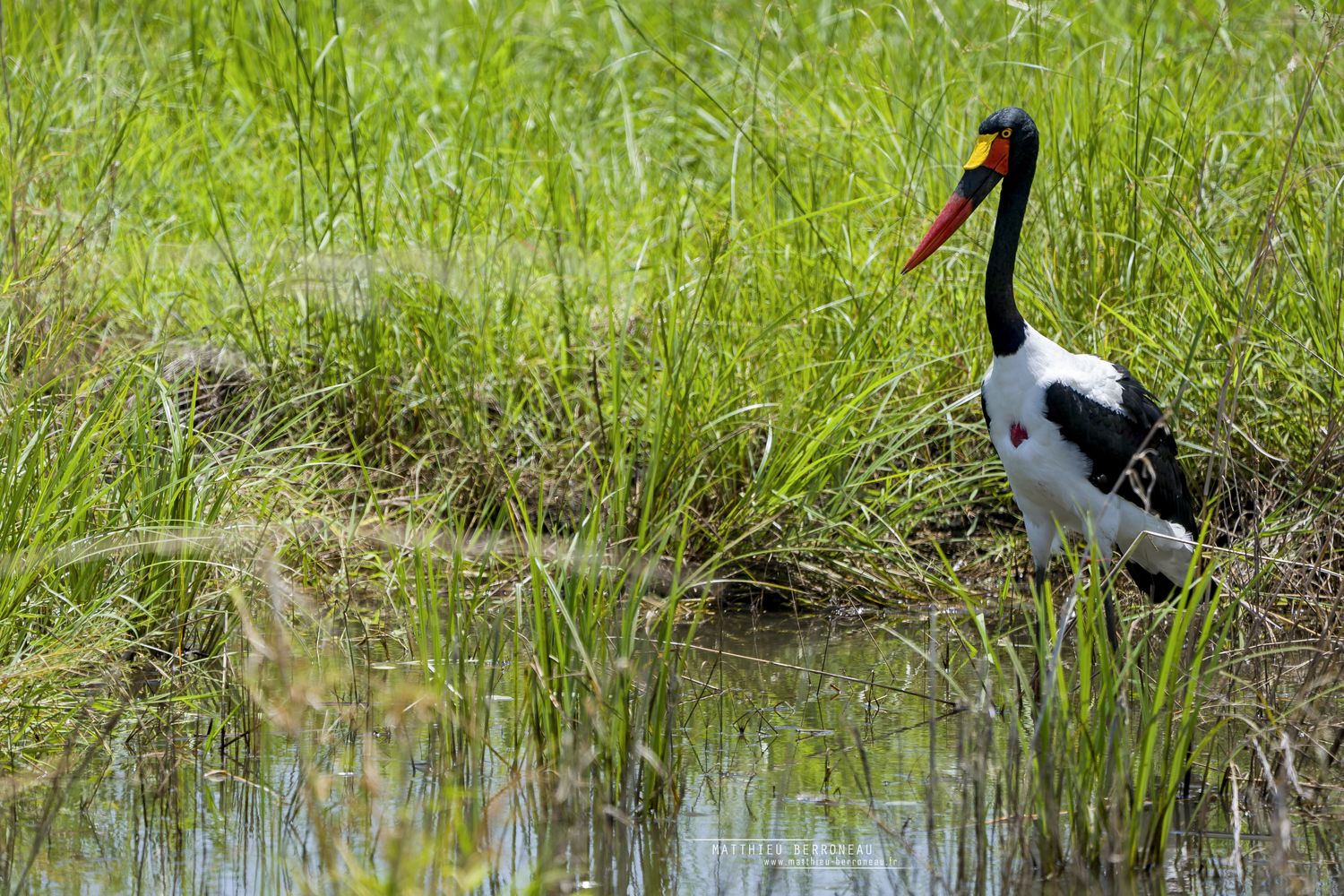
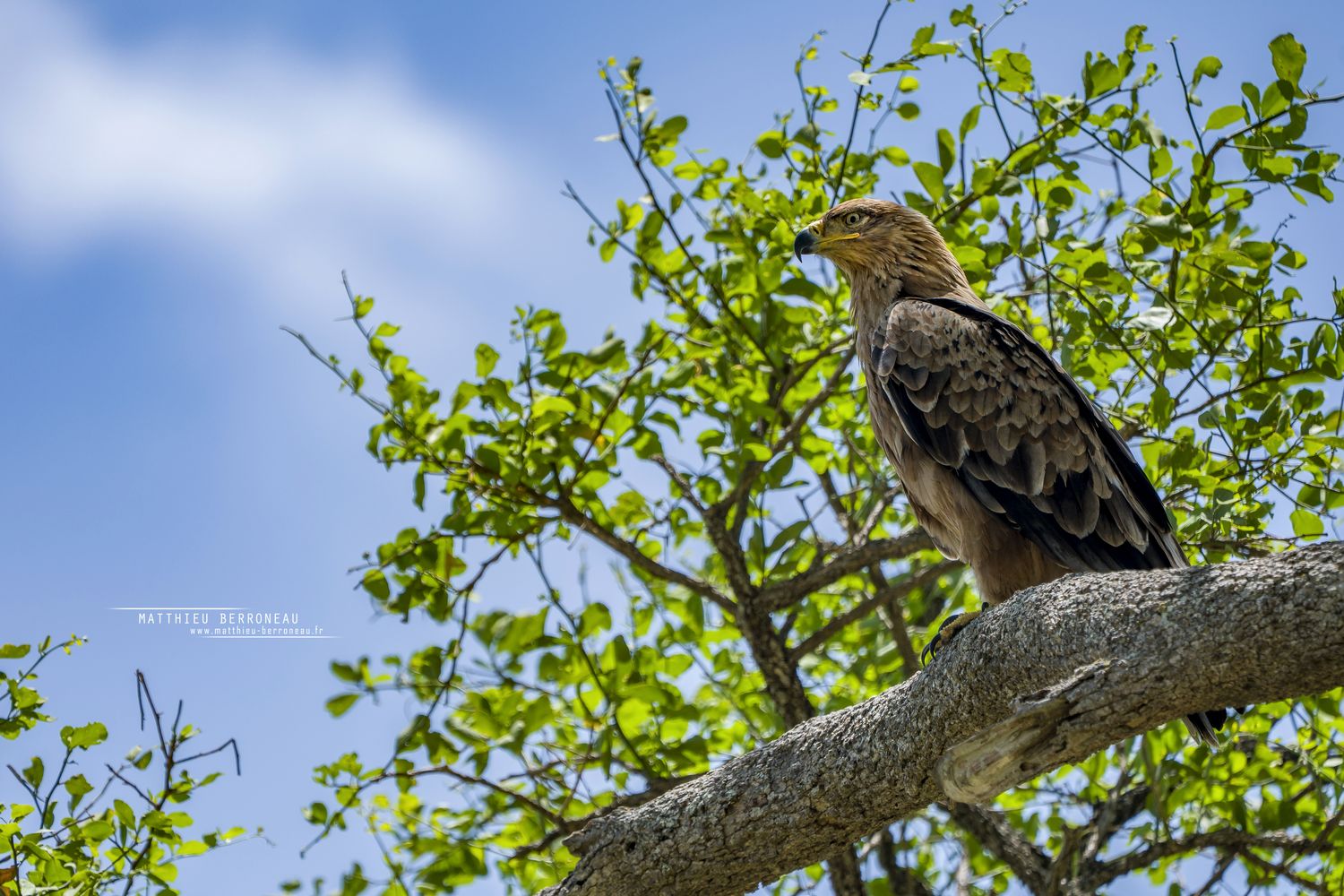
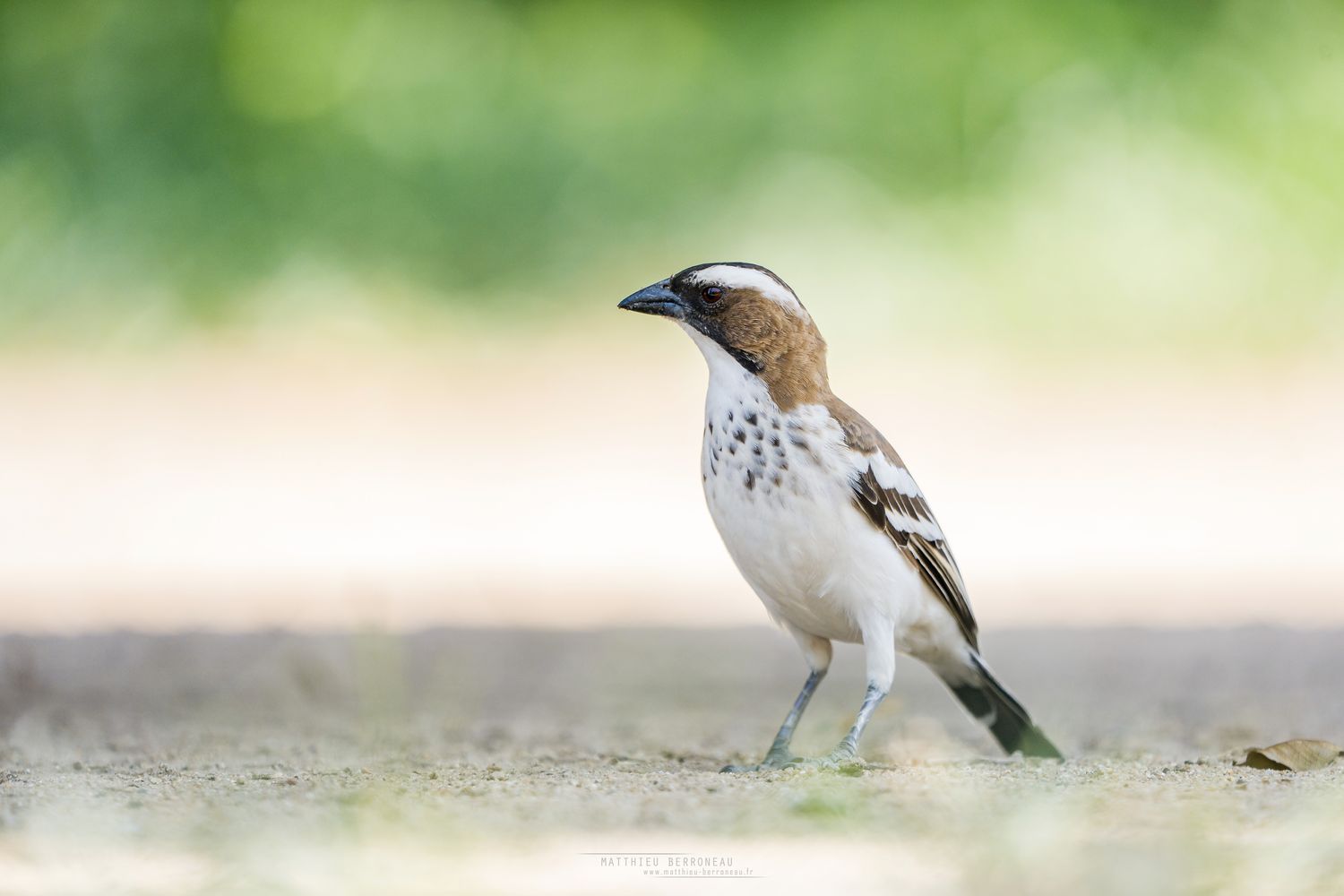
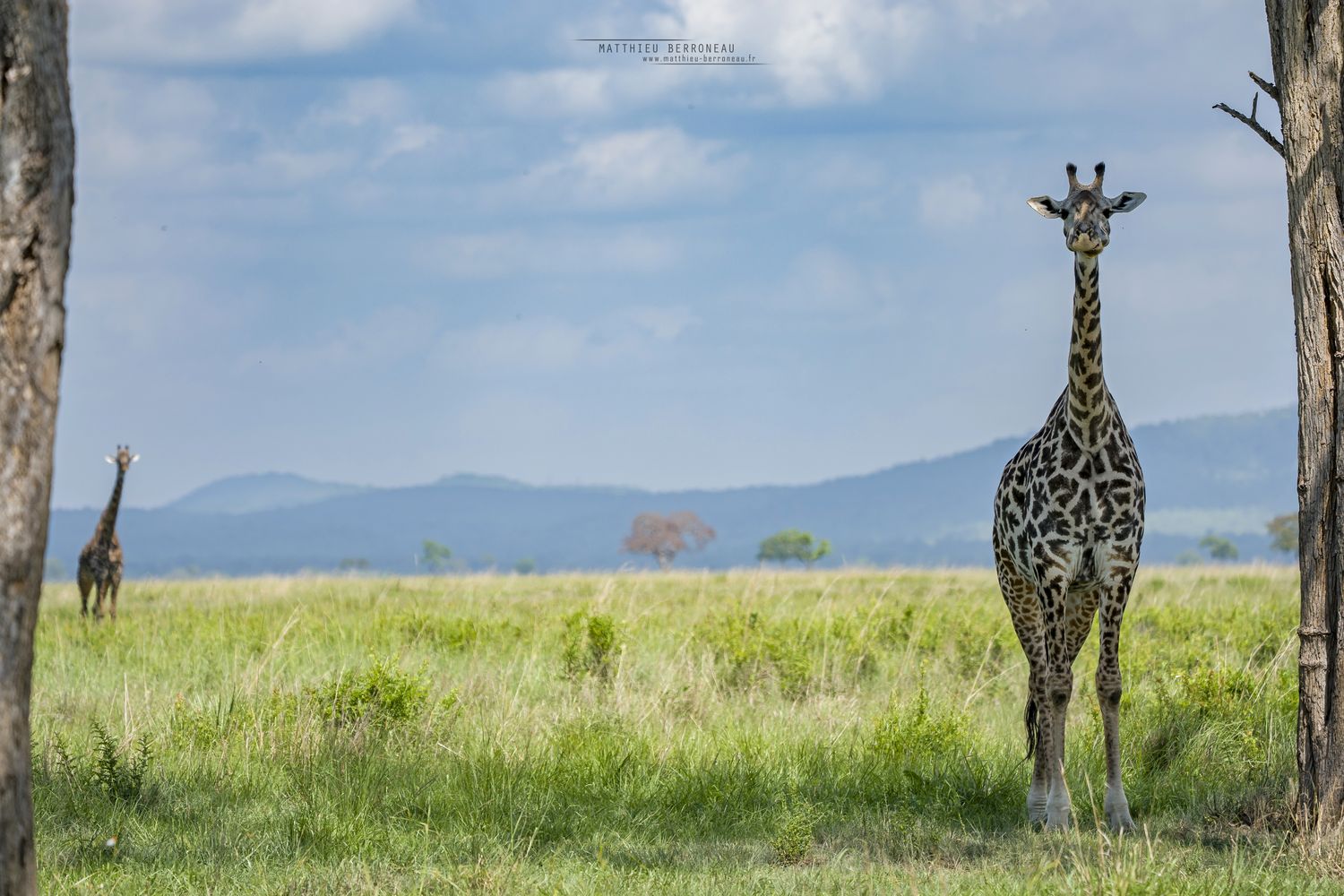
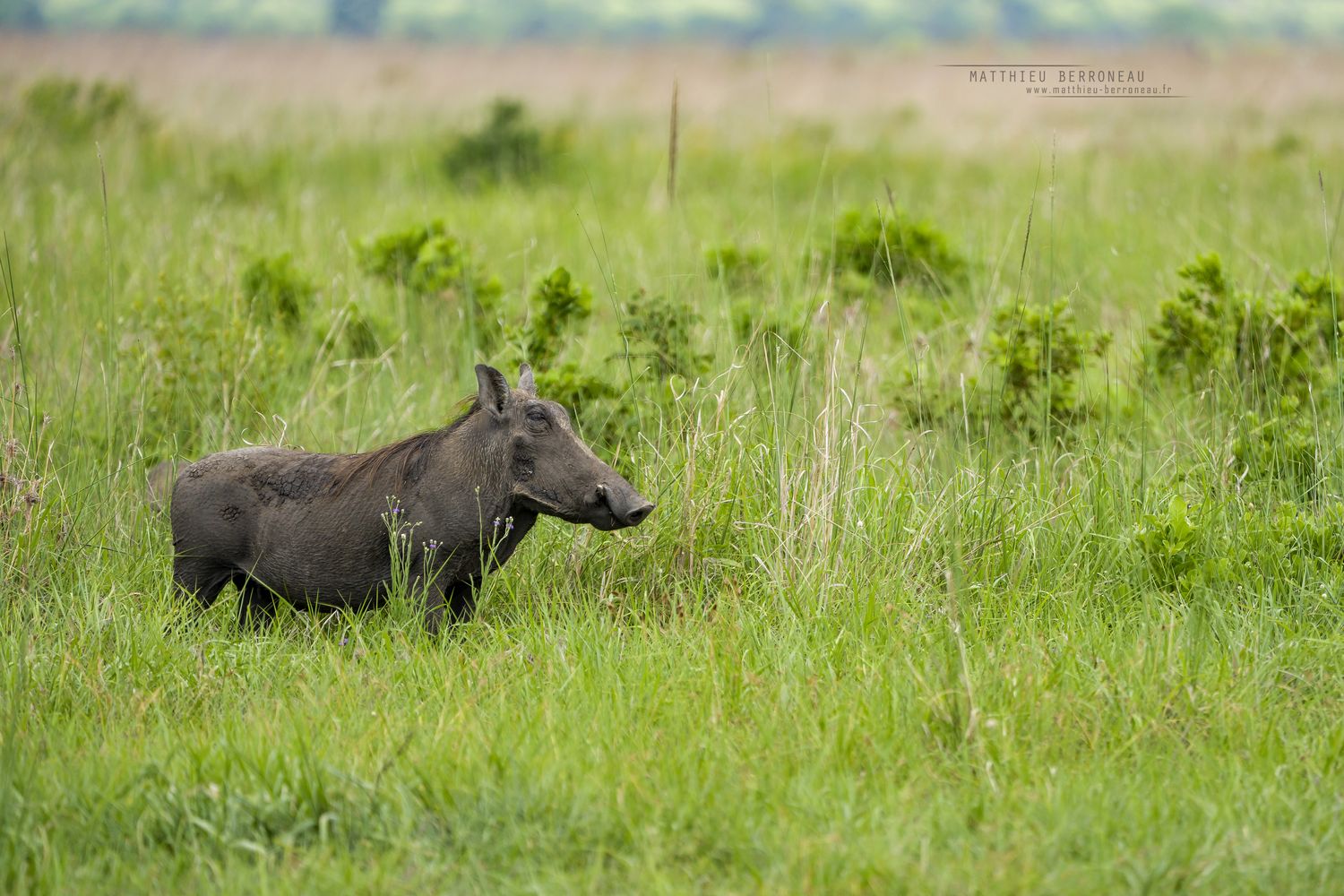
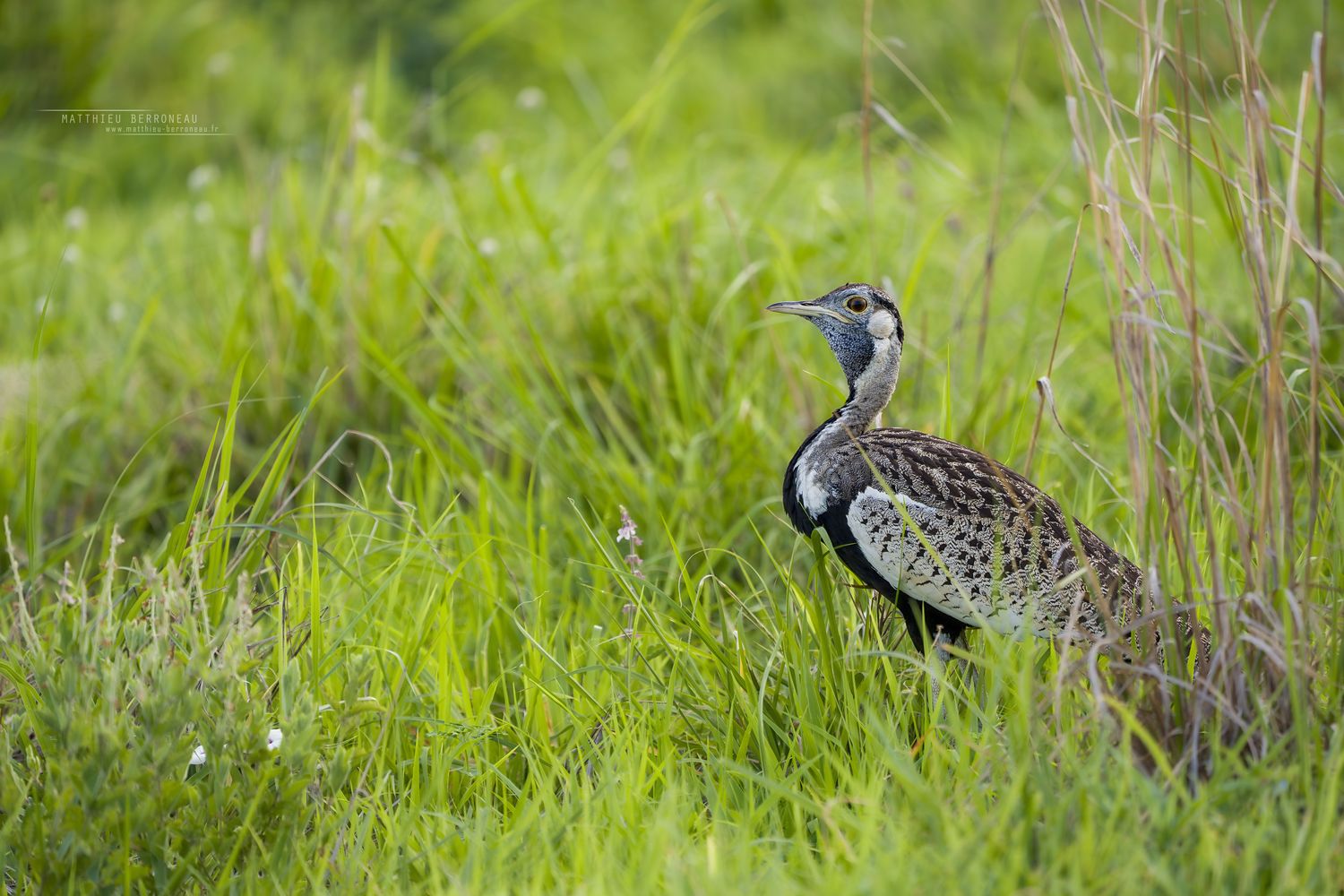
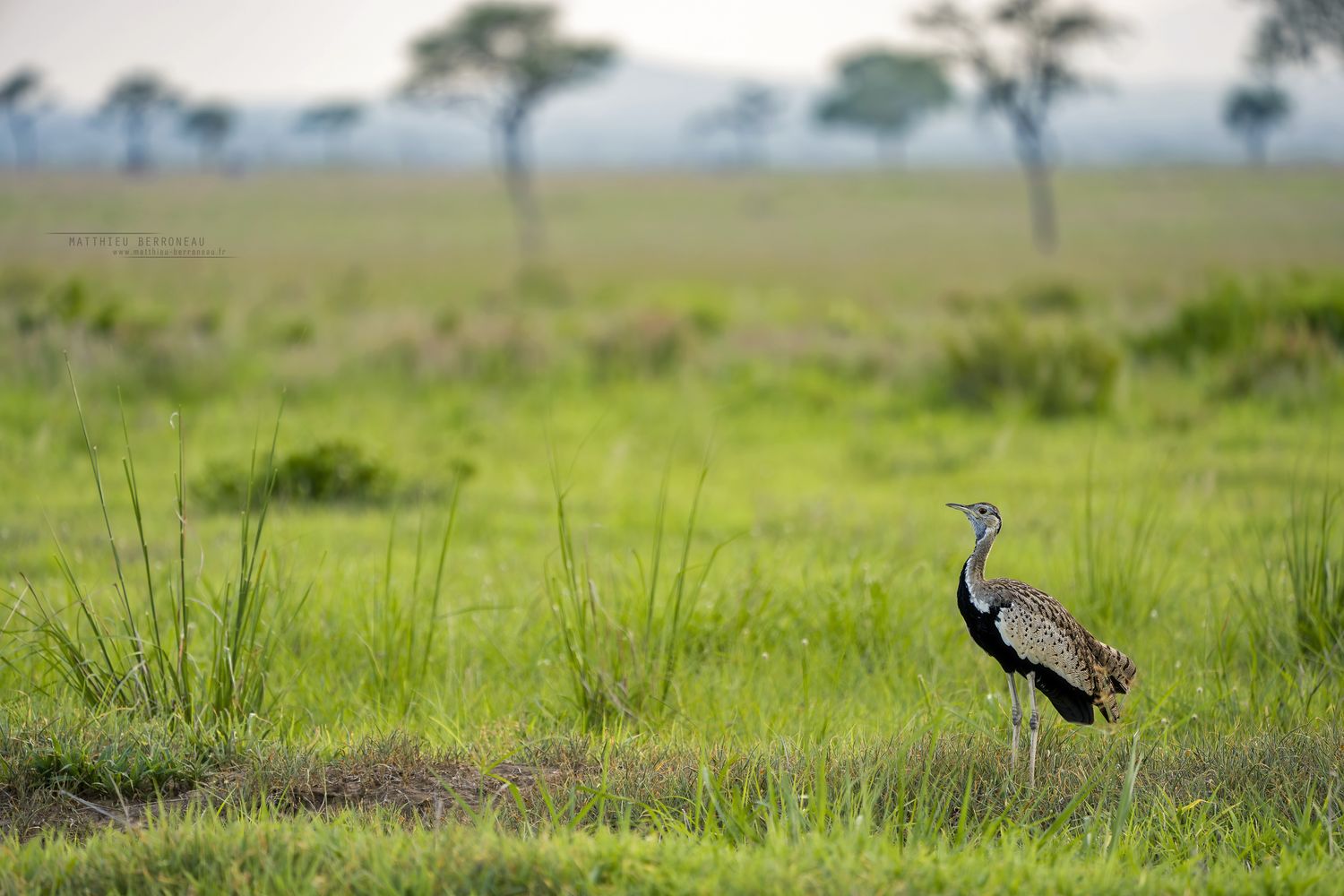
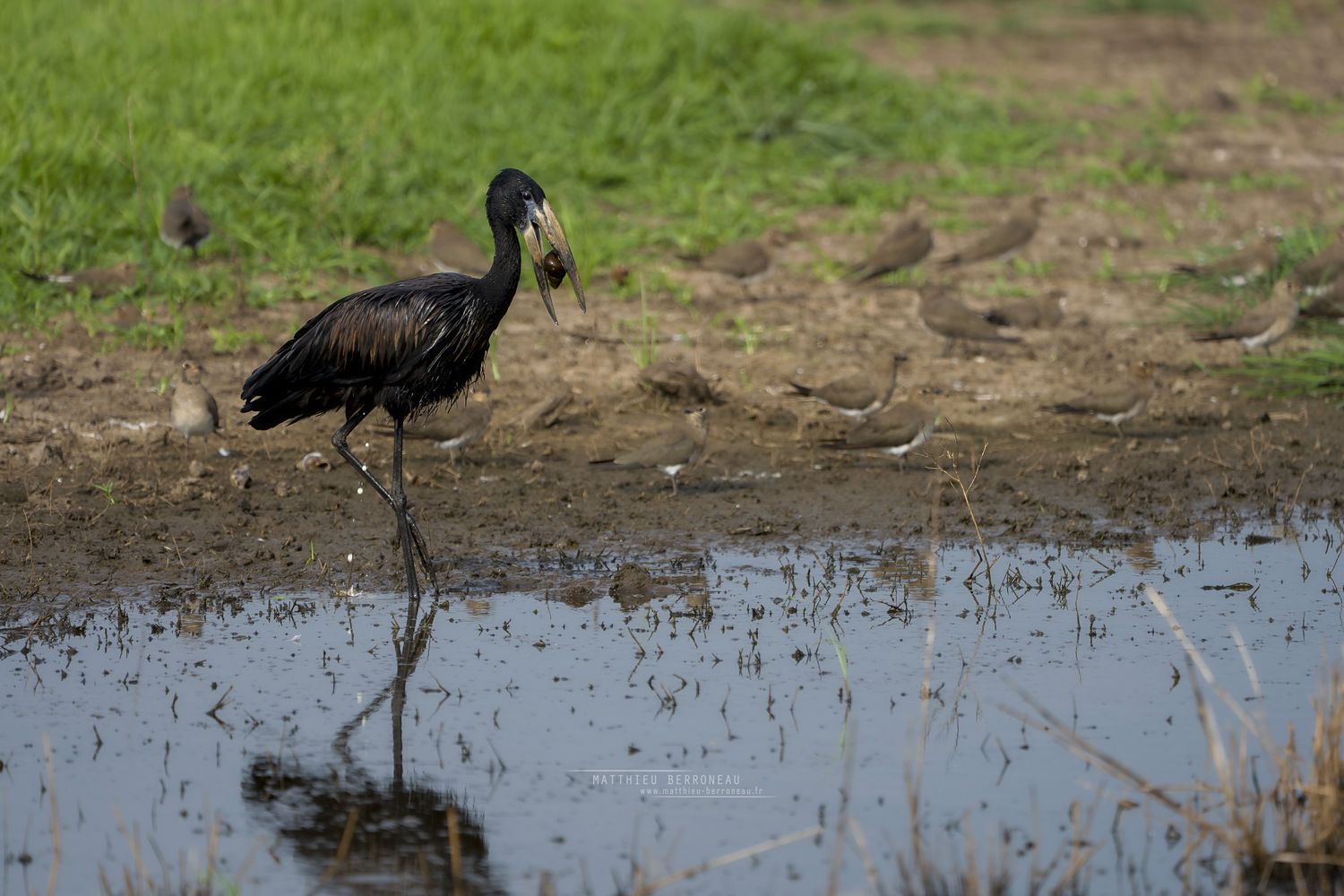
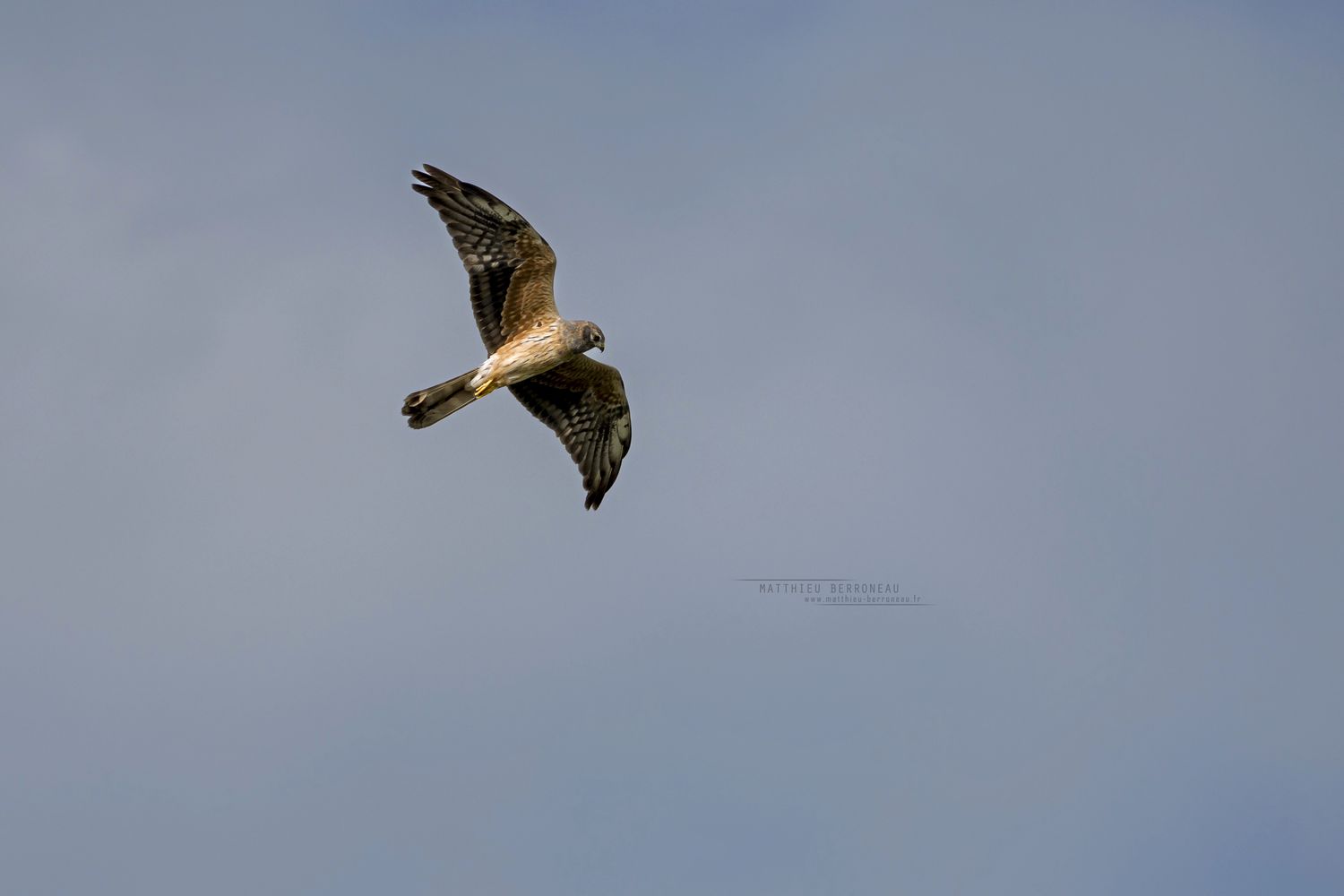
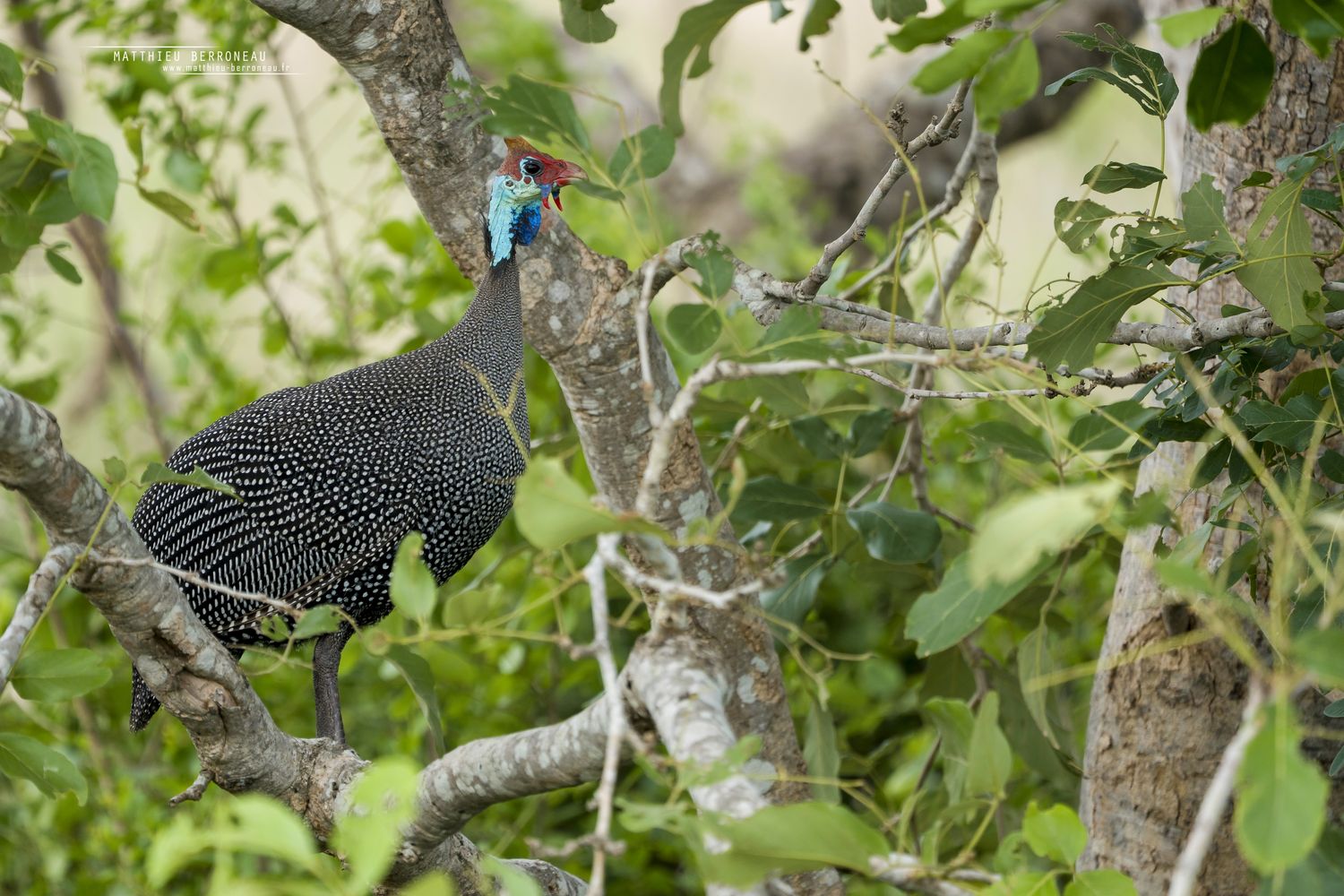
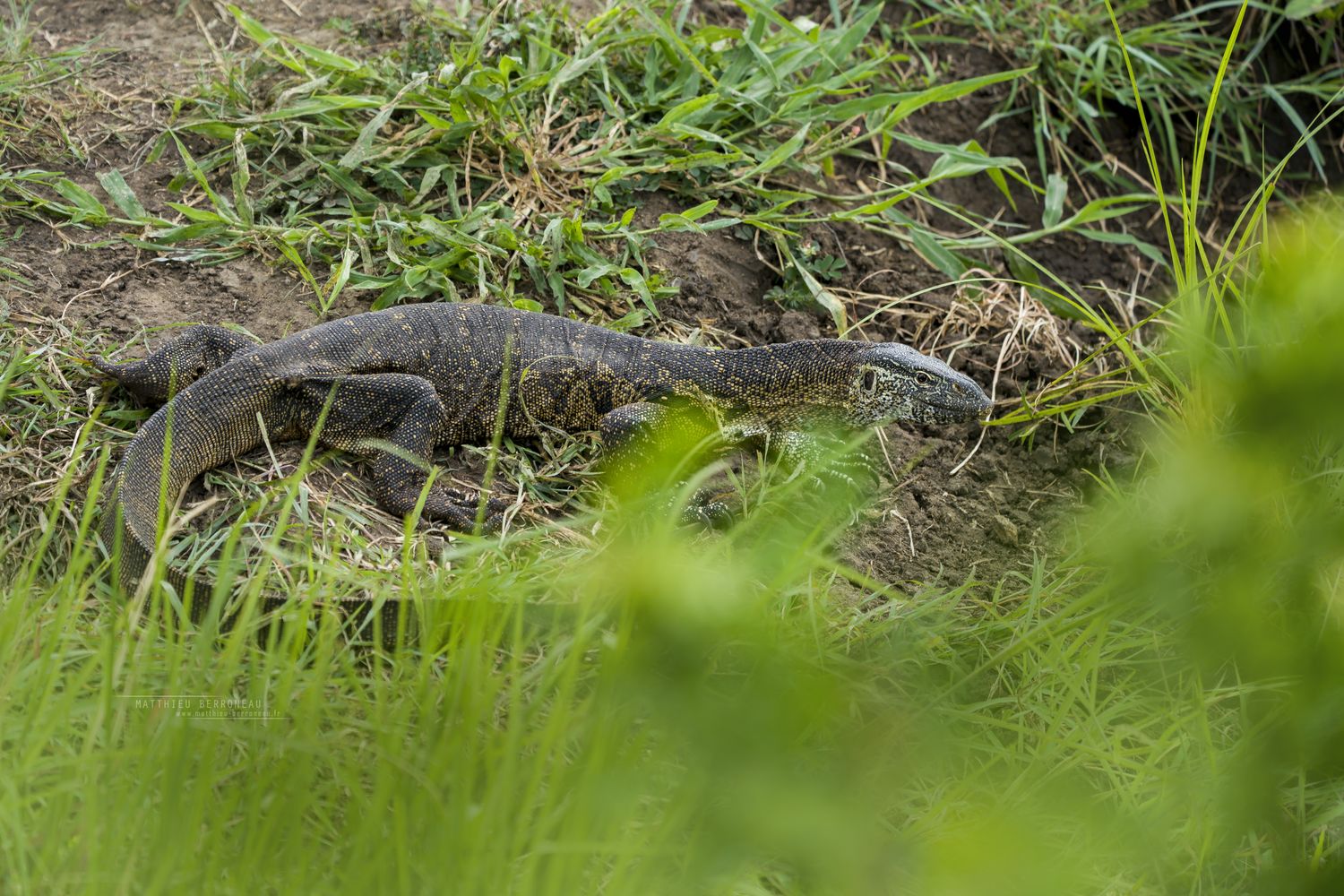
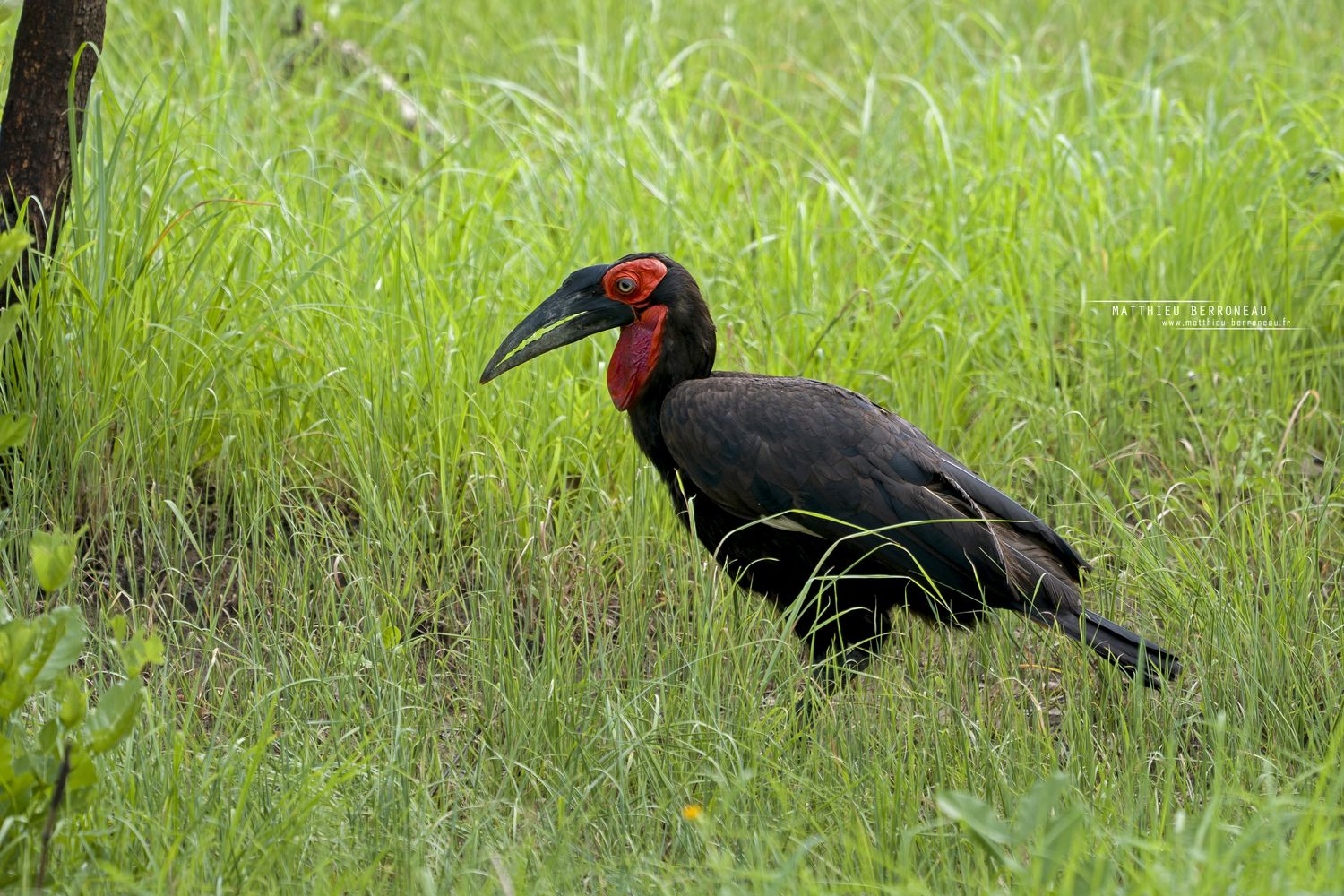
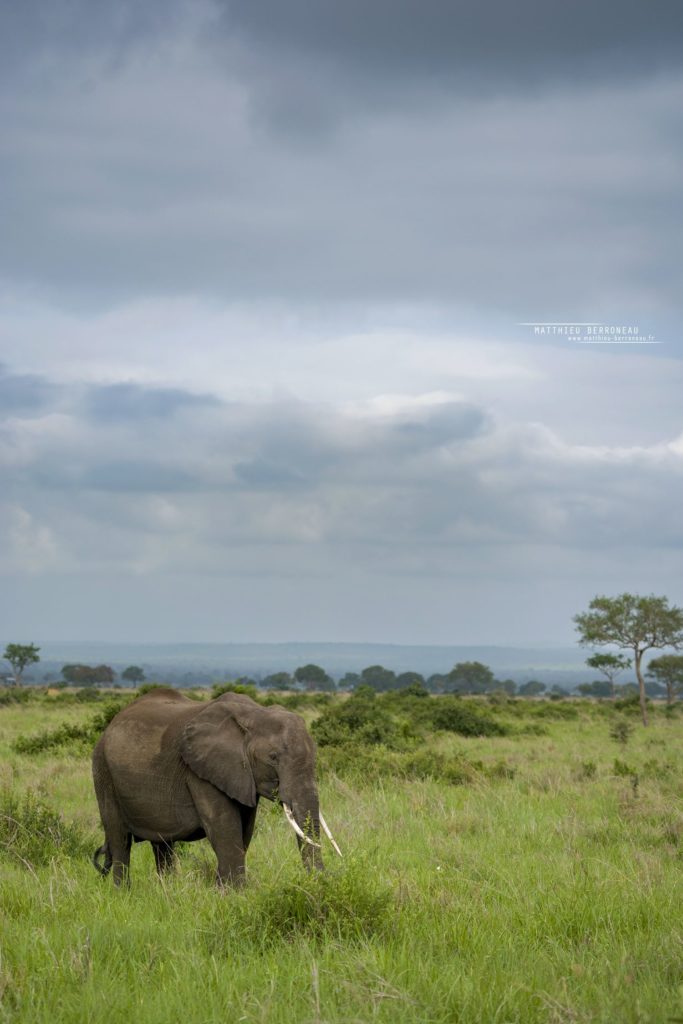
Loxodonta africana. Sony a7v & 100-400G, f5.6, 1/640s iso 100
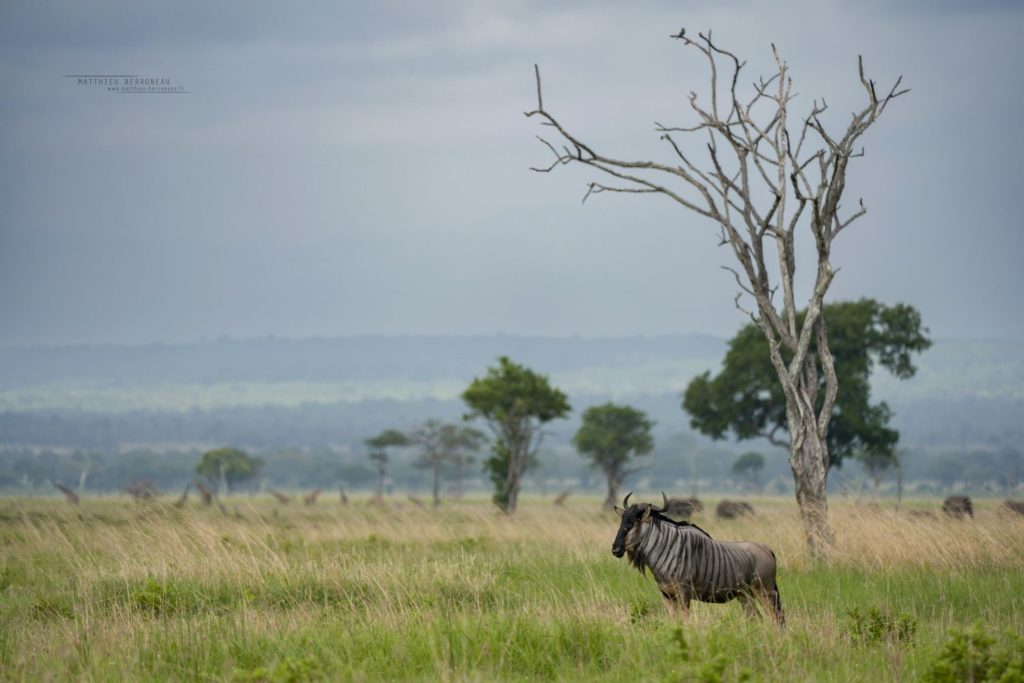
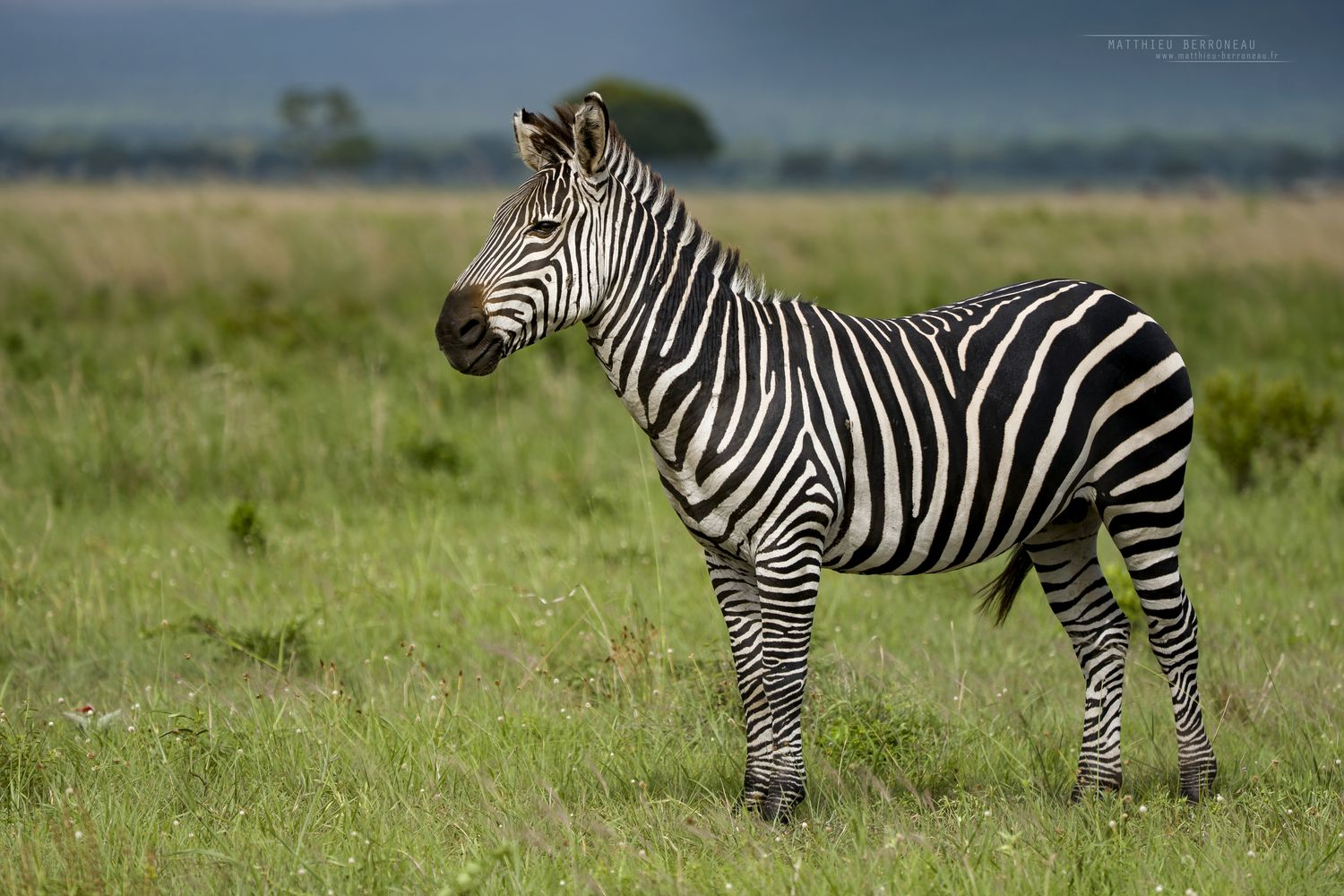
Connochaetes taurinus. Sony a7v & 100-400G, f5.6, 1/640s iso 100
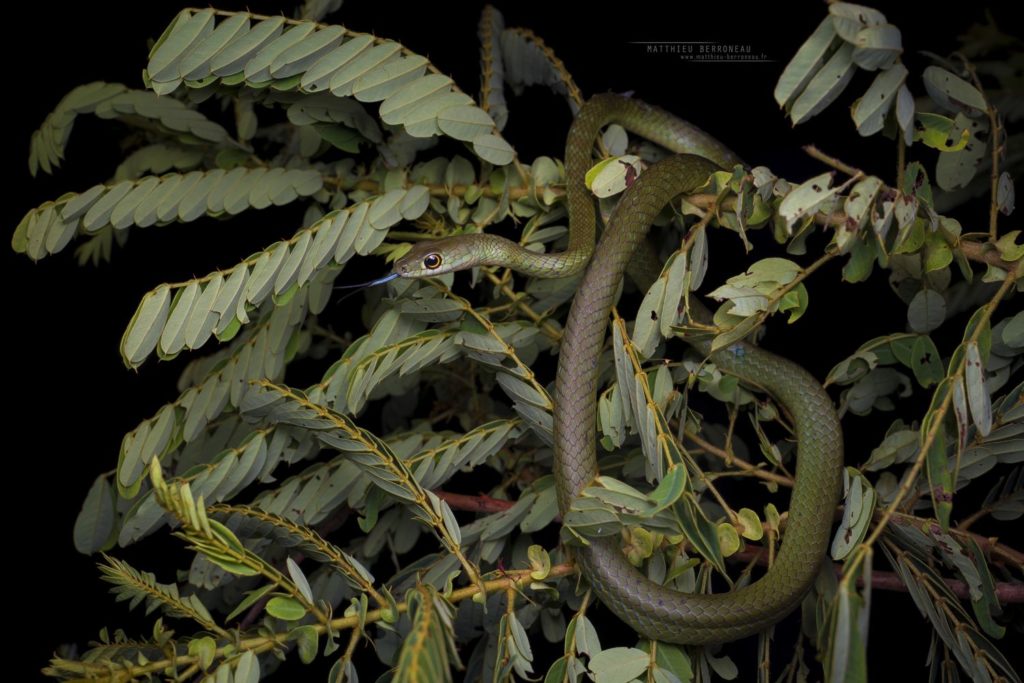
Philothamnus semivariegatus. Sony a7v & 20-70G, f11, 1/320s iso 320
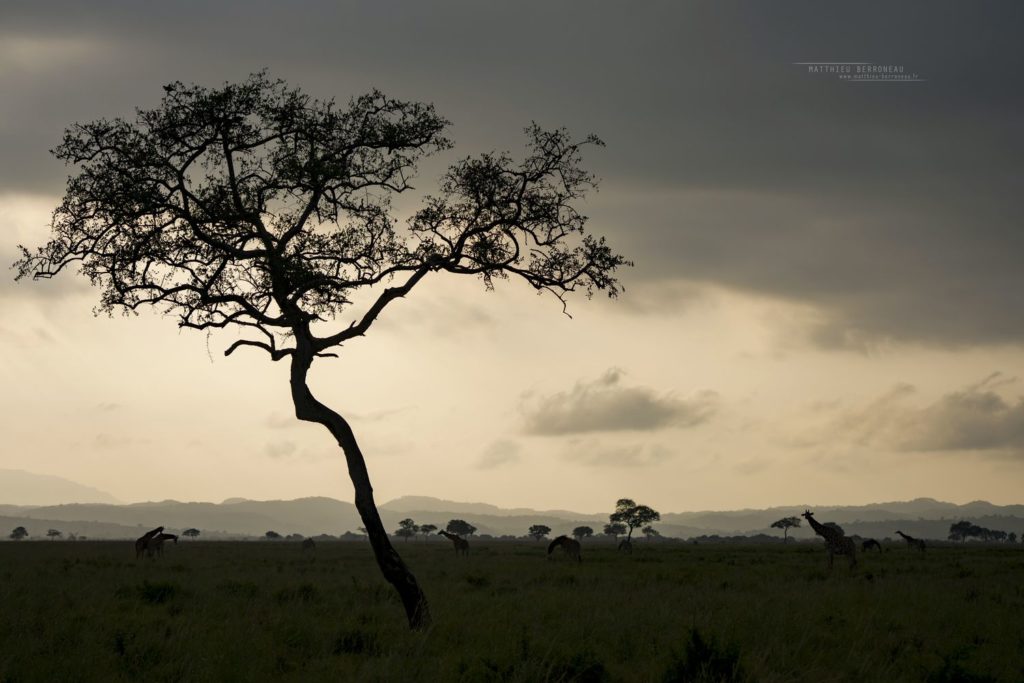
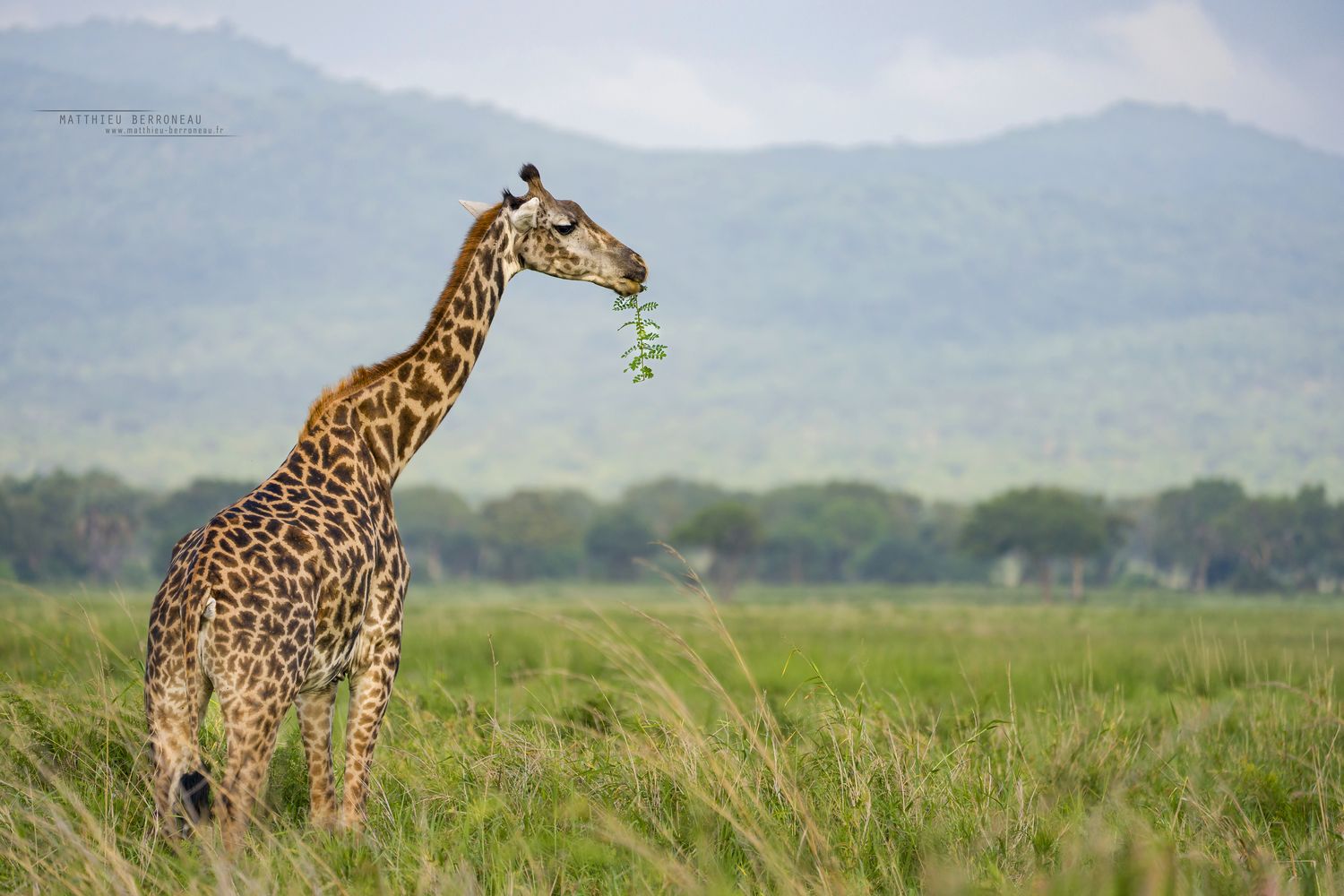
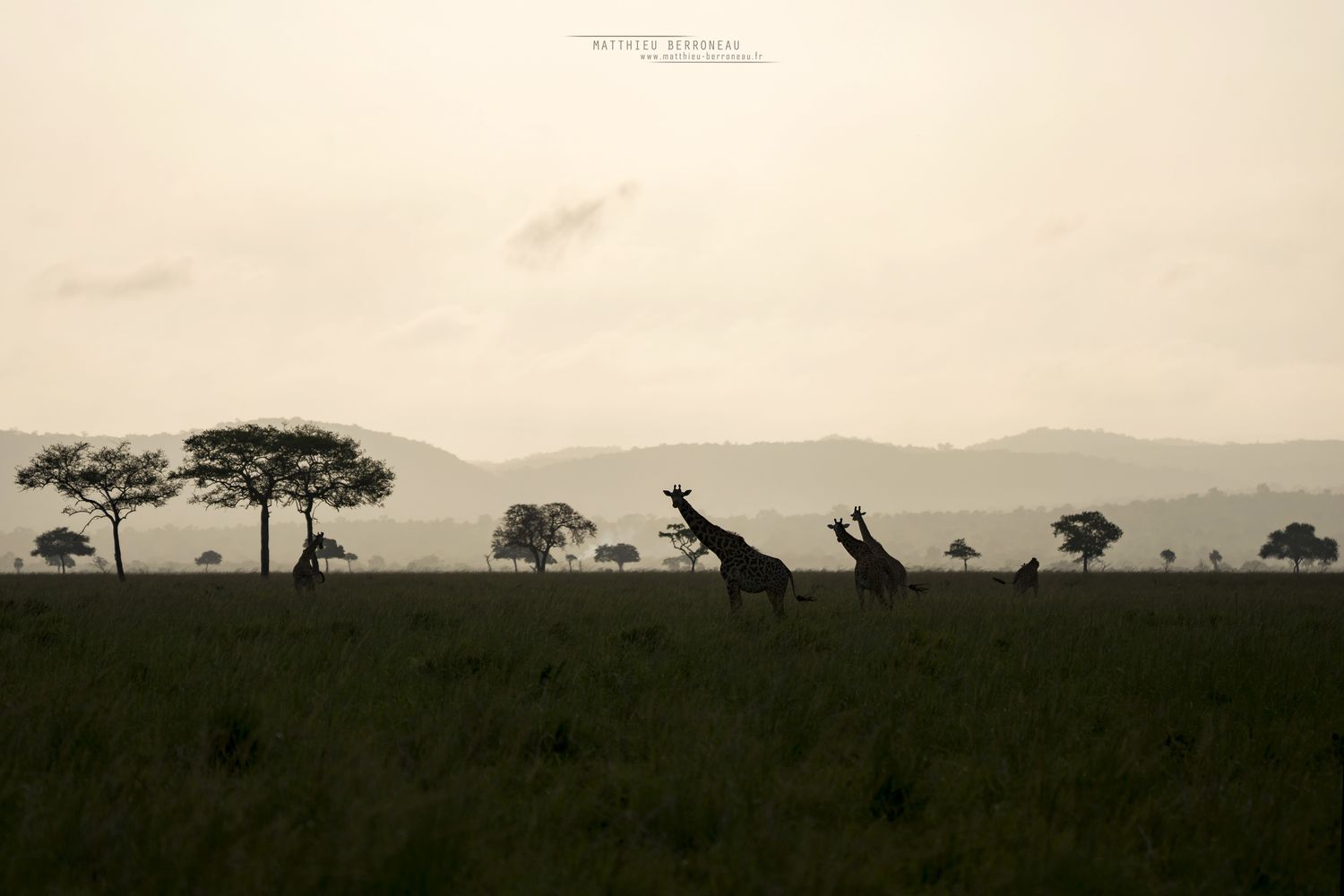
Giraffa tippelskirchi. Sony a7v & 20-70G, f5, 1/1600s iso 100
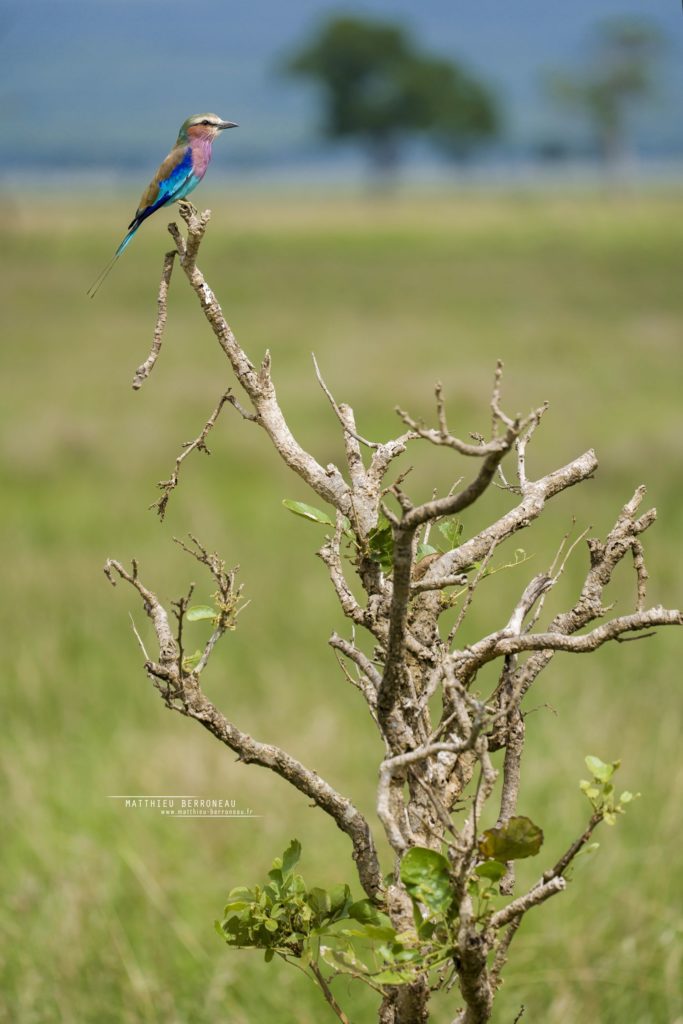
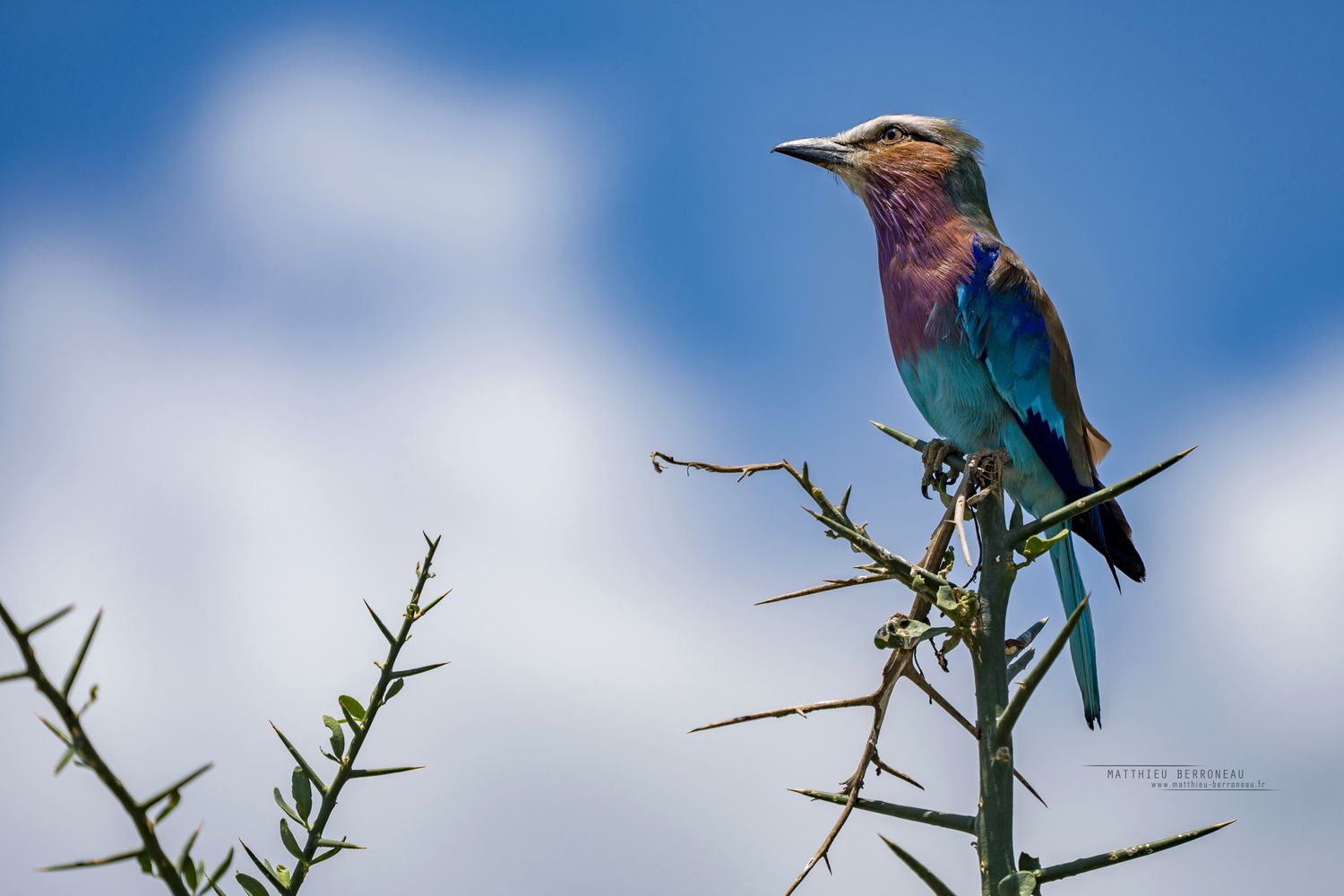
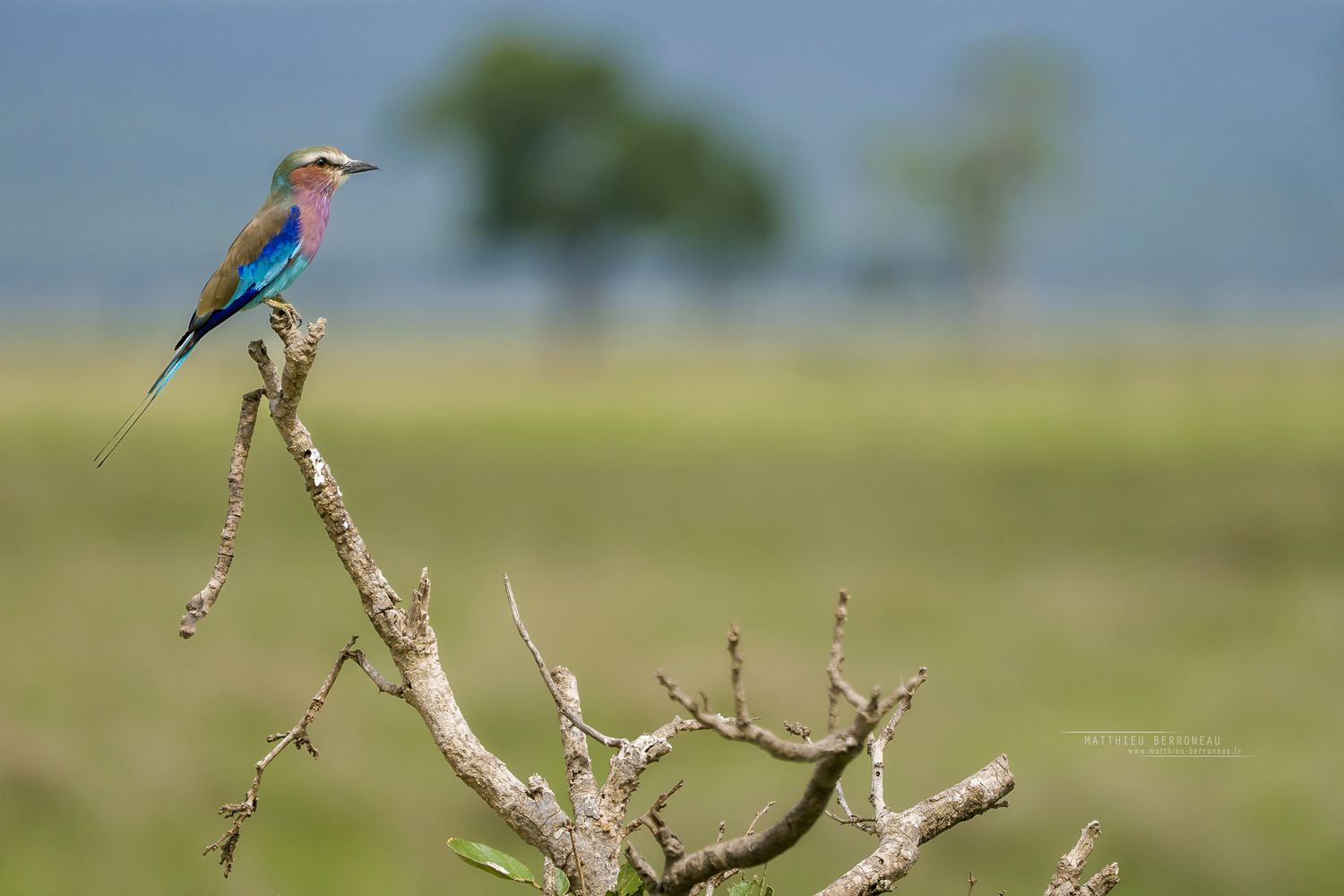
Coracias caudatus. Sony a7v & 100-400G, f5.6, 1/2000s iso 250
En conclusion :
A mon avis, Sony sort encore une masterclass avec ce Sony a7v : un boîtier “moyen de gamme” (même si ça se discute), ultra homogène, capable de tout faire. L’amélioration en comparaison avec les précédents boîtiers de la gamme est à tous les niveaux, et l’investissement pour les photographes all-around vaut à mon avis largement le coup, surtout pour ceux qui comme moi, sautent une génération de boîtier. J’ai le sentiment d’avoir bien fait d’attendre le passage du Sony a7iii à l’a7v. Globalement je ne vois pas vraiment de défaut à ce boitier : peut être aurait-il mérité un viseur encore meilleur… Mais je chipotte peut être. Et surtout il faut laisser des voies d’amélioration aux boitiers des gammes supérieurs (a7r, a1…).
In conclusion:
In my opinion, Sony has once again delivered a masterclass with the Sony a7v: a “mid-range” camera (although that’s debatable), ultra-consistent, capable of doing everything. The improvements over previous cameras in the range are evident at every level, and I believe it is well worth the investment for all-around photographers, especially those like me who are skipping a generation of cameras. I feel like I did the right thing by waiting for the transition from the Sony a7iii to the a7v. Overall, I don’t really see any flaws in this camera: maybe it could have had an even better viewfinder… But maybe I’m just nitpicking. And above all, we have to leave room for improvement in the higher-end cameras (a7r, a1, etc.).
Vous voulez me suivre à l’étranger dans mes folles expéditions ? C’est possible, n’hésitez à me contacter ! Costa Rica et à nouveau Tanzanie sont dans les cartons ! Want to follow me abroad on my crazy expeditions? It’s possible, so don’t hesitate to contact me! Costa Rica and Tanzania are in the works!
Ps : retrouvez la partie 1 du test – Find part 1 of the test.
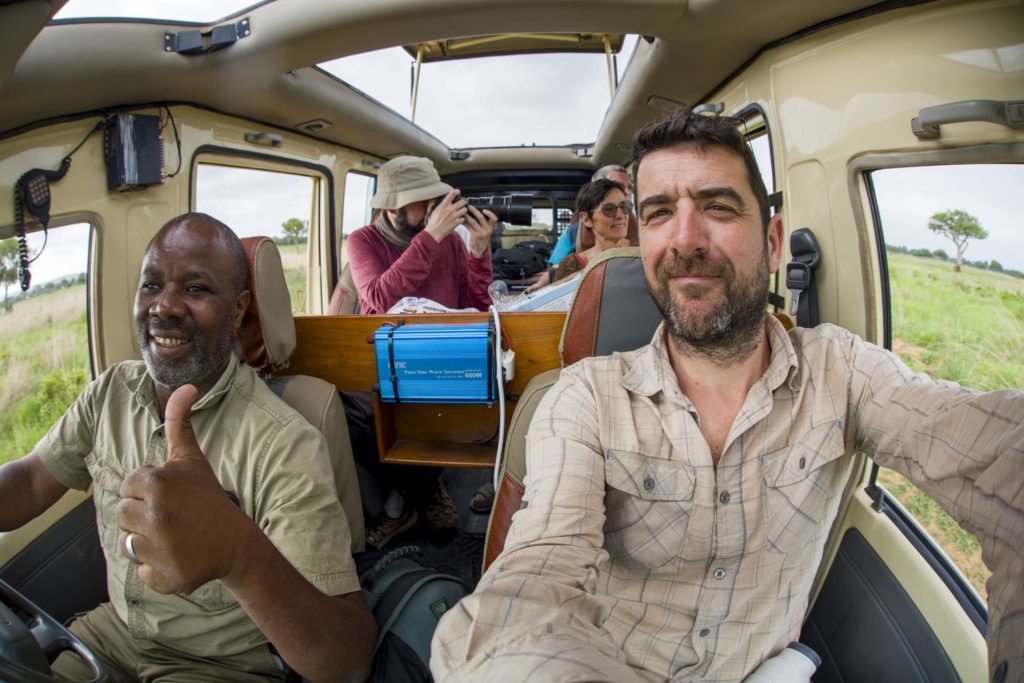
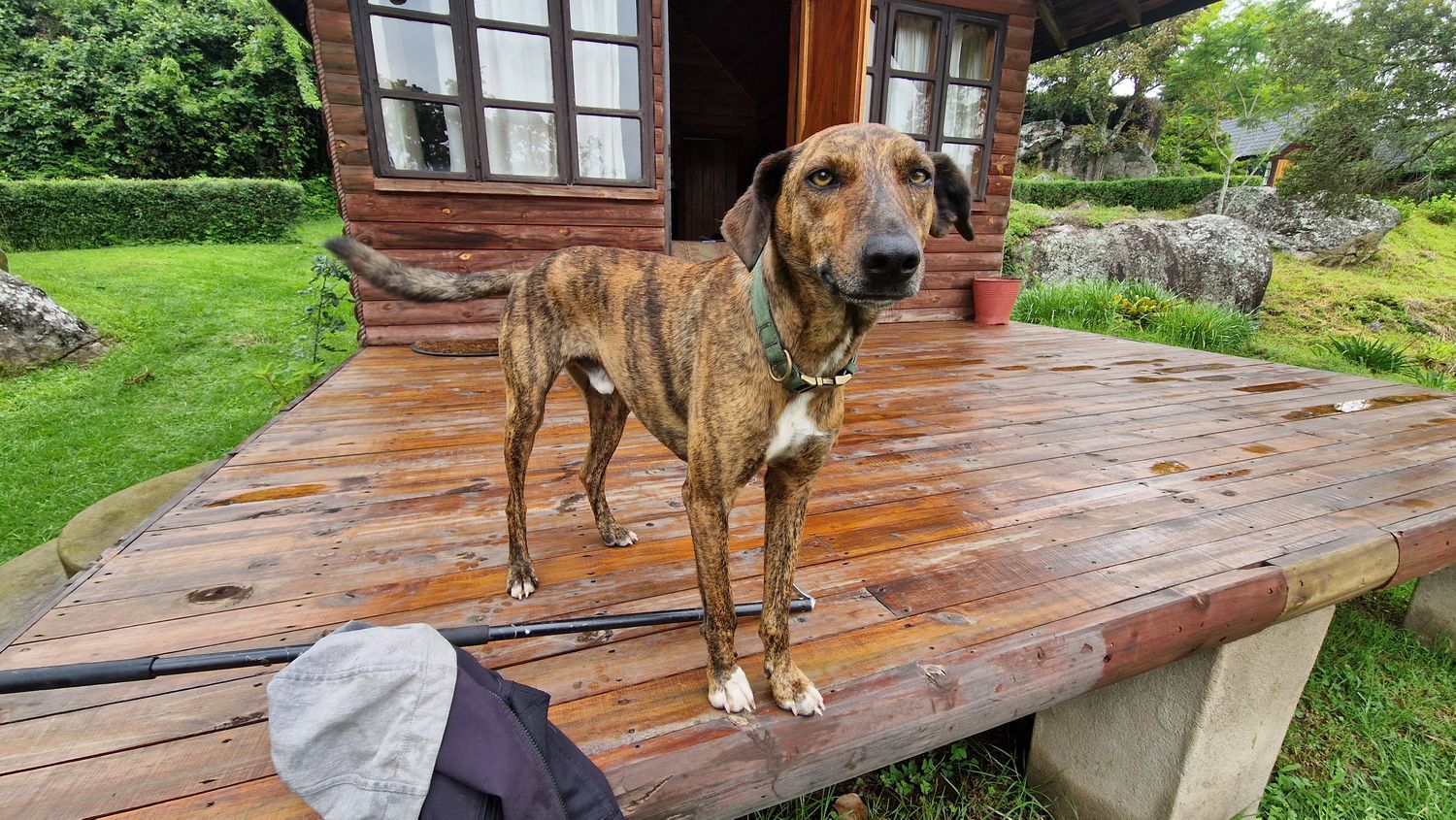
Emanuel valide ! Emanuel approves ! Sony a7v & sigma 15 fisheye, f7.1, 1/80s iso 100

a un commentaire à «Prise en main du Sony a7v – partie 2 : deux semaines de guidage en Tanzanie»
Vous pouvez laisser un commentaire ou Rétroliens (trackbacks) cet article.